Friendly Fitness Challenges Between Partners That Build Consistency
Partner challenges work when they're built around cooperation, not competition.
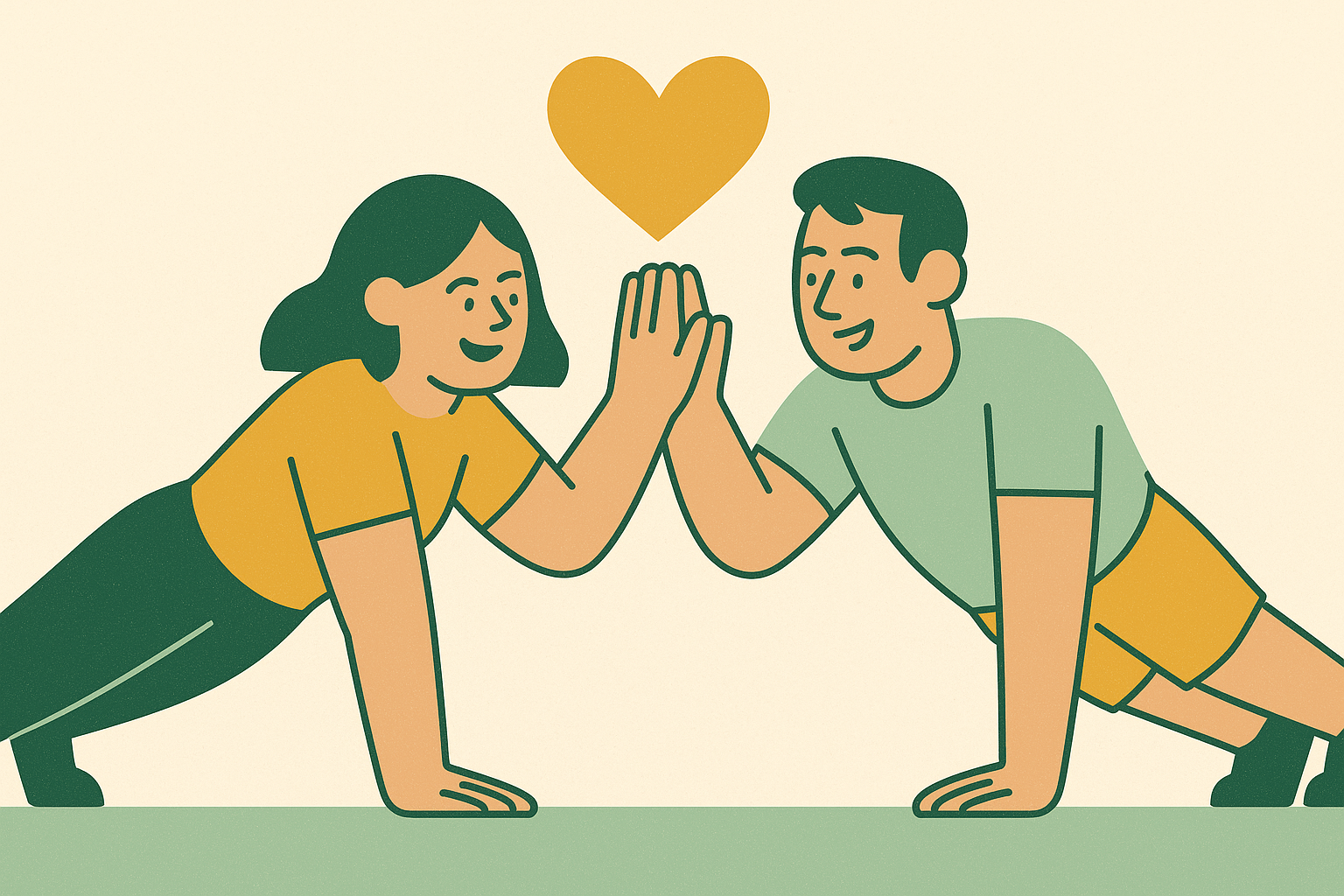
Most partner fitness challenges fail because the challenge was built, from day one, in a way that makes quitting the easier choice. The structure sets the outcome before anyone laces up a shoe.
Why fitness challenges between partners fail
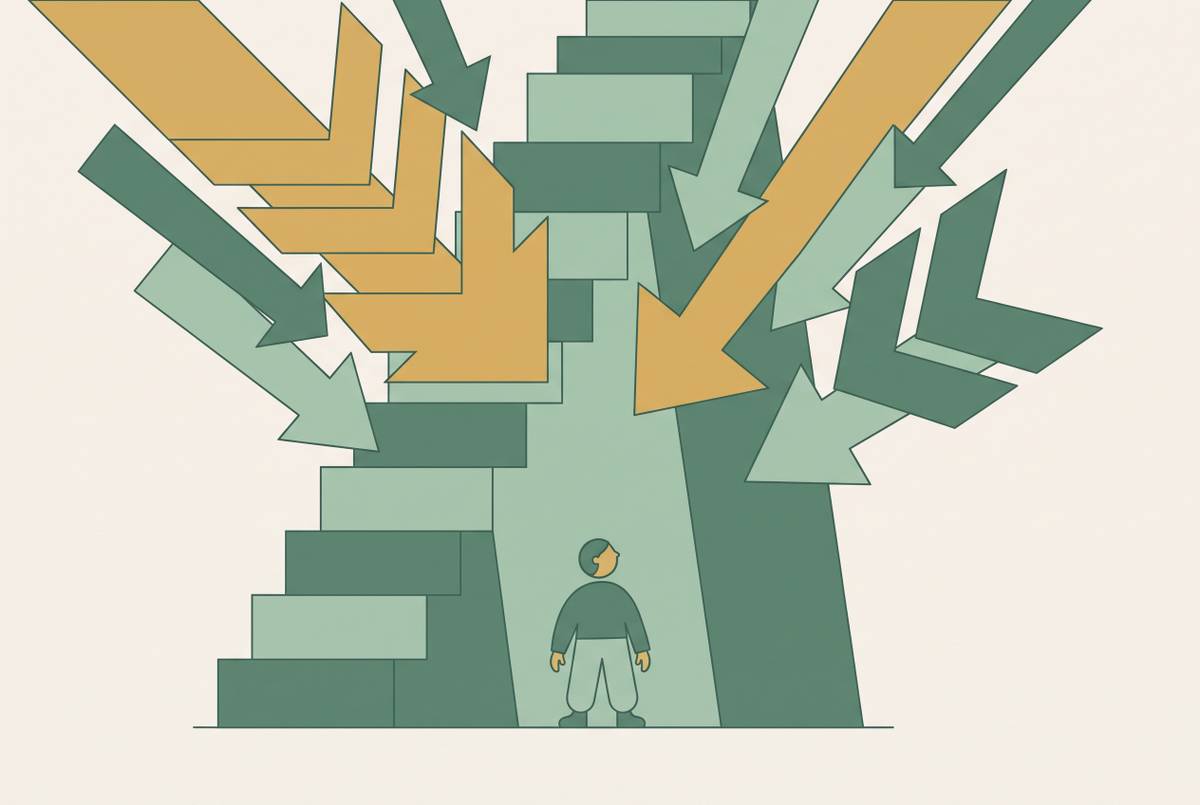
Picture two people who genuinely meant it. They signed up for the same app, bought matching water bottles, maybe even color-coded a shared calendar. Three weeks later, the group chat goes quiet and nobody wants to be the one to bring it up. It's a failure of design, and it happens to well-meaning couples constantly.
More than half of adults abandon their fitness resolutions, with a good chunk giving up before January even finishes. Partner challenges face that same abandonment math even with two people sharing the effort. If anything, a badly built partner challenge can fail faster, because now there are two schedules, two energy levels, and two definitions of "trying hard" all competing for the same 30-day window.
These two structural problems recur constantly. First, challenges get built around intensity instead of repeatability. That rewards whoever's already fit and punishes whoever's busy, so one person is always losing by rules they never agreed to. Second, challenges rely on external pressure, streaks, shame, somebody checking the app to see if you skipped leg day. Shame-based accountability backfires. It breeds resentment, and the second that external pressure disappears, so does the activity.
Everything from here forward is about fixing that design problem, not lecturing anyone about motivation.
The three psychological mechanisms that make a partner different from a solo workout
A partner changes the math of sticking with something, but only if the challenge is actually built to use that partner correctly. There are three separate mechanisms at play, and a well-designed challenge has to switch on all three, not just one.
The first is social accountability. Quitting alone means breaking a promise only you heard. Quitting on a partner means walking back something you said out loud to a specific person who was counting on you. A 1995 study in the Journal of Sports Medicine and Physical Fitness found that couples who joined a fitness program together stuck with it far longer over 12 months than married individuals who joined solo. The driver wasn't shared sweat. It was shared commitment.
The second is the Köhler Effect. When a less capable person works alongside someone stronger on a task where the group's outcome depends on the weaker member, that person puts in more effort, often without realizing it. Watching a partner grind through a tough set makes your own effort feel smaller, which makes you push harder. Research on this motivation gain effect shows the boost happens automatically, not as some conscious decision to try harder.
The third is emotional support, and it's not just about showing up next to someone. A University of Aberdeen study found that gaining a new exercise companion increased how often people exercised, and that effect got stronger when the companion offered real encouragement, not just a shared slot on the calendar.
A challenge that triggers accountability but skips support, or offers support without any shared stakes, only switches on part of the system. Partial activation gets partial results. The challenge has to be built to turn on all three mechanisms at once.
Why cooperative framing outperforms competition for lasting consistency
The sharpest design question in this whole space is simple: should partners compete or cooperate? The answer has real nuance, and it directly shapes which challenge format fits which couple.
A 2026 study in Frontiers in Virtual Reality pitted a cooperative-framed condition against an adaptive AI-competitive one. The cooperative setup produced the highest enjoyment. The competitive setup produced the highest mean power output. People in the cooperative condition talked about companionship and shared pacing afterward. People in the competitive condition talked about challenge and comparison. Both groups beat exercising alone on enjoyment, so the choice between formats is about matching the format to what you want out of it.
Competition isn't free, either. It boosts motivation and performance, but it also carries costs at the psychophysiological level, a strain that is visible not on a scoreboard but in how someone feels about the activity afterward. That tradeoff is why cooperation tends to be the safer bet when enjoyment and long-term well-being matter as much as raw output. The same 2026 study found these preferences were predictable from personality, a link the researchers flagged as a direction for future research.
Competition still has a real place, and a large trial shows exactly where. The STEP UP trial, run by Patel and colleagues and published in JAMA Internal Medicine, tested three gamified designs against a control group: support, collaboration, and competition. All three beat the control while the game was actively running. But once the intervention ended, the support and collaboration groups dropped off, while the competition group kept significantly more physical activity than the control group during follow-up.
Those two findings together yield a clear practical rule. For most couples chasing consistency over raw performance, cooperative structures are the safer foundation. Competition works best layered in as a short burst, a four-week sprint, a weekend wager, not as the permanent architecture of the challenge.
Challenge design lessons from the BE FIT trial
If cooperation versus competition answers the "what," the BE FIT trial answers the "how." It's the clearest evidence that specific structural choices, not just the act of doing a challenge together, decide whether any of it survives past the finish line.
The Behavioral Economics Framingham Incentive Trial, published in JAMA Internal Medicine, randomized 200 adults from multiple families into a gamified step program or a control group. People in the gamification arm hit their step goals on a majority of days. The control group hit theirs on roughly a third of days.
The mechanics behind that gap are transferable to almost any challenge two people might build. Each week, a family got a bank of points. Every day, one family member was randomly picked to represent the whole team. If that person hit their step goal, the family kept the points for the week. If not, the points were gone. Nobody carried the weight of being the permanent weak link, because the random pick spread both the pressure and the forgiveness across the whole group. On top of that, anyone could ask another family member for help on their representative day, so support wasn't an extra step, it was built directly into the rules.
The results held up after the game ended. People in the gamification arm increased their daily steps by an amount that worked out to nearly a mile a day, and that difference was still showing up three months after the challenge stopped. Most challenges don't manage that. Partial persistence is the real benchmark, and BE FIT cleared it.
The transferable lesson is that shared stakes, built-in forgiveness, and an easy way to ask for help are what turns a short-term game into something that lasts, not the specific step counts or point totals. The size of the reward or how brutal the goal is barely factors in.
The mismatched-fitness-levels problem and personalized goals
Two people chasing one fixed target is the failure mode that wrecks more partner challenges than any other, especially if both partners are chasing the exact same daily step count or weekly workout count, and one of them starts from a very different fitness baseline than the other. It's a competition with the winner already decided, and the losing partner eventually walks away from it.
This is a design flaw, not a motivation problem. The fitter partner gets bored because the bar is too low. The less fit partner feels perpetually behind. And the busier partner, the one with the rough week at work, gets punished by a goal that doesn't know or care what their schedule looked like.
Clinical research points to the fix. The Mates in Motion intervention, a collaboration between Arizona State University and Mayo Clinic in Arizona, built its step goals around each person's own history. Every week, each participant got a personal step goal based on how many steps they took the week before, capped at their second-highest day from that stretch. The goal grows with the person. It never outruns what they're actually capable of right now. Mates in Motion was built for a specific clinical context, hematopoietic cell transplant patients and their partners, but the design logic travels well beyond that setting. Any two people with different starting points can use the same approach.
The same principle applies in app design more broadly. Apps that use AI to calibrate sets, reps, and difficulty for each person let two partners train at the same time, even doing the exact same movements, without either one feeling like they're dragging the other along or coasting through something too easy. When neither partner is structurally set up to lose, the challenge stays a shared project instead of quietly turning into a source of resentment.
Four challenge formats that put these principles into practice
None of this needs to turn into a spreadsheet. The formats that actually work tend to be the simple ones, built to carry the right psychological structure without demanding a project manager to run them. Think of these four as a menu rather than a ranking, since the right pick depends heavily on the couple's own temperament: more competitive pairs will naturally lean toward the wager, cooperative pairs toward the team bank, in line with the personality split the 2026 Frontiers study flagged.
The shared streak with a forgiveness rule. Both partners track one simple weekly behavior, three workouts, a daily walk, a short movement break, and the streak holds as long as both show up most weeks. Missing a day should prompt a quick check-in, not a guilt trip. That one rule keeps a single bad week from torching the whole thing.
The percentage-improvement wager. Each partner picks their own baseline and competes, or cooperates, on who improves their own number by the bigger percentage over four weeks. Whoever improves more wins something genuinely playful, a dinner pick, a say in the next weekend plan, nothing tied back to fitness itself. Personal baselines keep it fair across different fitness levels, and the wager gives it a bit of edge without the psychophysiological costs that come with pure head-to-head competition.
The team-points bank, adapted straight from the BE FIT logic. Each week opens with a shared pool of points. Workouts completed keep the points in the bank; workouts skipped cost the team. At month's end, the pool funds something the couple enjoys together. Because the points belong to both people, this format pulls in the Köhler Effect and a sense of shared identity without crowning a winner or a loser. The randomized "representative" piece from BE FIT can be scaled down for two people easily: alternate days where one partner's workout counts double for the bank, so both get high-stakes days without either one carrying the weight permanently.
The check-in photo challenge. After a workout, each partner sends the other a photo, no numbers, no metrics, just proof of showing up. A photo often motivates more than another chart full of data, and it builds visible, shared acknowledgment without asking for a perfect session every time. This format fits especially well for couples who train separately on different schedules, since it keeps the connection alive even when the actual workouts never overlap.
Running a challenge long enough for a real habit to form
The format matters less than what happens after the initial excitement wears off. The real test is whether the structure survives the slide from novelty into routine, which is exactly where most challenges quietly die.
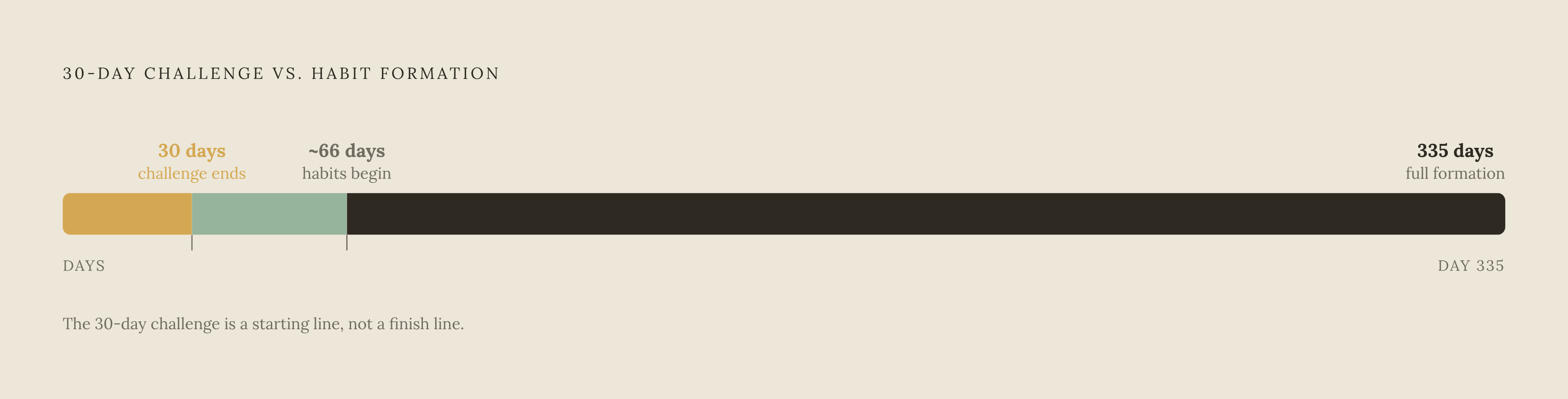
Habit formation takes longer than almost any challenge on the market. Research from the University of South Australia found that habits may start forming within two months, but the full process can stretch out to 335 days, with the typical range running into the second month and averages well past that. A 30-day challenge can spark a new behavior, but it rarely has enough runway to lock it in. Treat the first 30 days as a starting line, not a finish line.
The smarter approach is to build in a planned transition instead of letting the challenge just quietly expire. When the initial window ends, swap in a new format rather than stopping cold: move from the shared streak into the team-points bank, or follow a percentage-improvement wager with a check-in photo stretch once the baselines have shifted. Keep whichever structural features proved to work, shared stakes, a forgiveness rule, personalized goals, and carry them forward into whatever comes next. A challenge that evolves instead of ending gives the habit the months it actually needs to settle in, rather than the handful of weeks most people mistakenly give it.