Fitness Culture Pressures That Make Beginners Quit
Gym culture's unspoken rules and intimidation keep beginners from coming back.
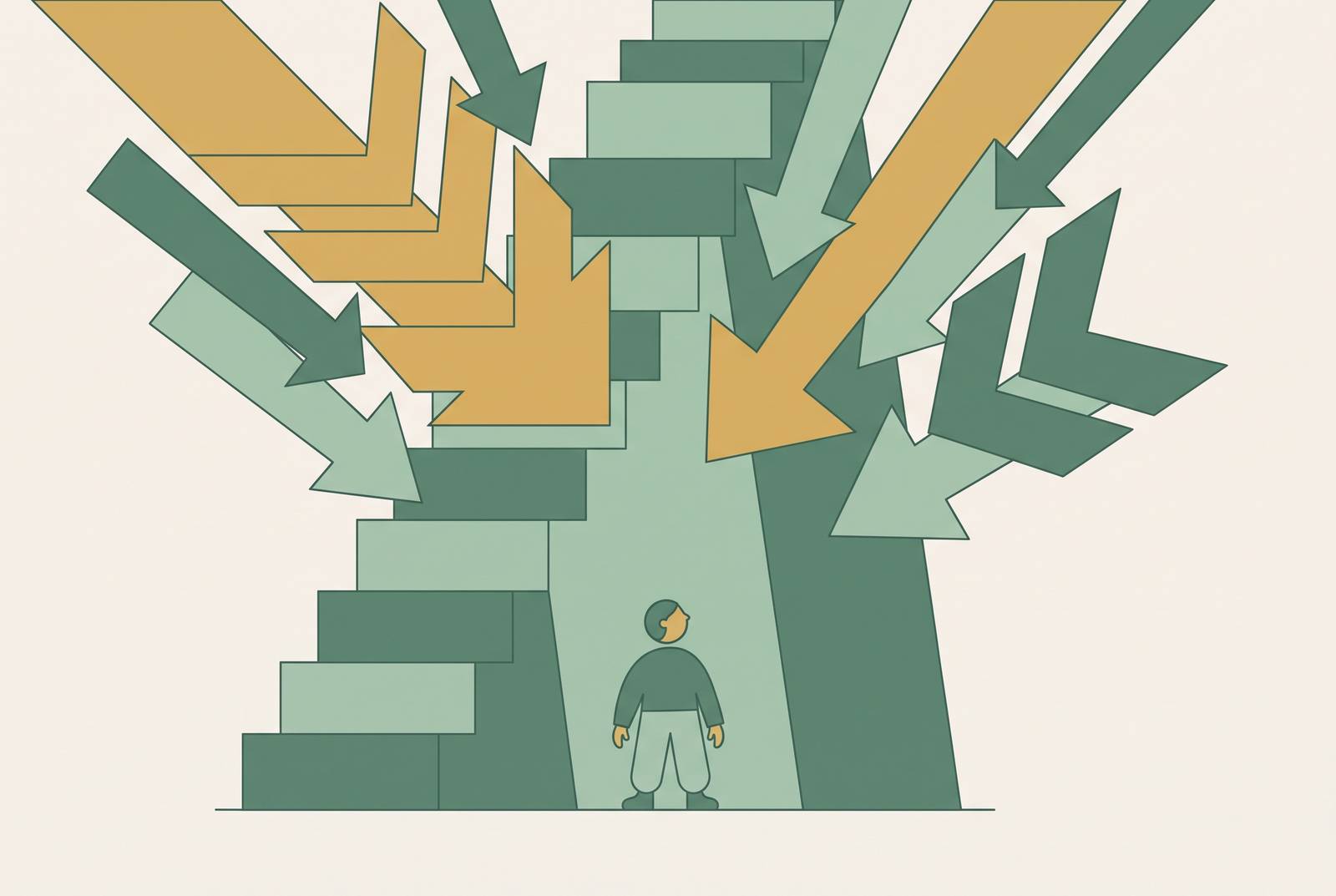
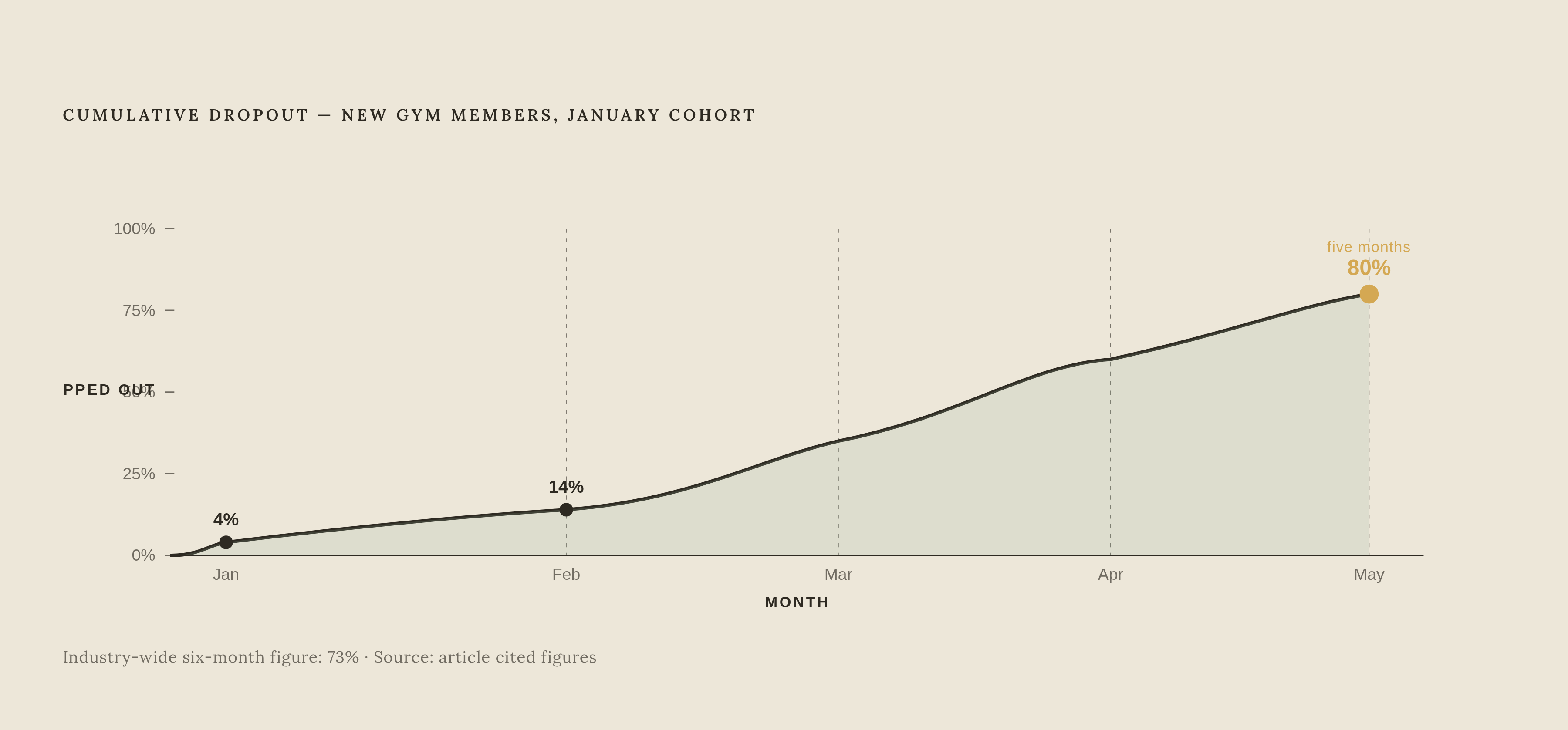
Roughly half of everyone who starts an exercise program quits within six months. That statistic has held steady in adherence research for decades, and gym owners have grown so comfortable with churn that many build their entire business model around it, with industry figures putting new-member dropout as high as 73% inside that same six-month window. The dropout curve even has a predictable shape: 4% gone before January ends, 14% by the end of February, 80% of January joiners out the door within five months. If that many people, across that many decades, keep quitting on schedule, the problem is the environment. It's the environment.
What fitness culture looks like from the outside looking in
Fitness culture is bigger than a building with dumbbells in it. It's Instagram aesthetics, influencer content, a vocabulary of terms nobody explains to you, body norms presented as defaults, and an unspoken pecking order that exists the moment you walk through the door.
A new member walks in and sees people who clearly know the room, and that gap becomes visible fast. A new member walks in and sees people who clearly know the room: which machine goes where, how long to rest, what to say to whoever's hogging the squat rack. That fluency reads as judgment, even when nobody's actually judging anything. Only 18% of gym members show up consistently (three times a week or more). The vast majority of people paying for a membership are already standing outside the "real gym person" identity the culture insists is the baseline. The imagery on the walls, the language in the class descriptions, the layout of the equipment: all of it is built for people who already arrived, not people who are still arriving.
The physical intimidation of the gym environment itself
There's a name for this now: gymtimidation. It's common enough to have generated a Google billboard campaign in the early 2020s and specific enough to appear in peer-reviewed literature as recently as 2026.
A 2025 UK market research survey put real numbers behind the feeling. 47% of non-gym members said the thought of joining a gym or leisure facility made them uncomfortable. 32% said they were afraid of being judged negatively. 17% said they'd feel physically unsafe, citing risk of harassment or intimidation. This isn't anxiety as a disorder, it's a rational response to a real power imbalance in the room. The environment is the problem, not the nervous system reacting to it.
The weight room is where this gets concentrated. It's historically male-dominated, and women consistently cite not knowing what they're doing as a reason to avoid it. Research has found gym intimidation prevalent among female college students, with women who attended less often reporting higher levels of it. That's not a coincidence, and the feeling is already present before arrival, not just after. It's a barrier that keeps people from arriving.
Social media's fitness content and its effect on a beginner's sense of what's normal
For younger beginners, social media isn't a supplement to fitness culture, it's the main entry point. Over 72% of young adults say they've tried a workout they first saw on TikTok or Instagram. The sheer volume of that content is staggering: over 500,000 videos carried fitspiration-related hashtags by March 2024, and related content had already racked up more than a billion views by early 2022.
What is actually shown in those videos affects viewers' body expectations more directly than the view count does, since nearly 80% of the videos featured women shown as thin and toned, full stop, no variation, according to Flinders University researchers who reviewed 200 popular TikTok fitness videos, along with a separate 2023 study cited by Banne... Researchers at Flinders University reviewed 200 popular TikTok fitness videos and found nearly 80% featured women shown as thin and toned, full stop, no variation. A 2023 study cited by Banner Health found that nearly two-thirds of the hundred most popular fitness influencer accounts promoted unhealthy or unrealistic body shapes. Add in the fact that plenty of these creators never disclose performance-enhancing drug use while marketing their physique as the output of a "program," and you get a beginner staring at a target that training alone cannot produce. It's a math problem with no solution, not motivation. That's a math problem with no solution.
Gym bro culture and toxic masculine norms that set a standard excluding most men and intimidating most women
Gym bro culture isn't a random subculture that popped up by accident. Researchers have linked it to toxic masculinity, social media performance, and disordered eating patterns.
The body standard on offer is narrow: extreme muscularity pursued through methods that include starvation cycles, aggressive bulking diets, and steroid use. "Looksmaxxing" has become the current shorthand for this, referring to the practice of maximizing appearance toward a standard that's structurally out of reach for most bodies. The word itself is doing useful work: it makes the absurdity visible instead of letting it hide behind "just getting in shape."
The consequences run past vanity. Mary Pritchard, a psychology professor at Boise State University who has studied body image and eating disorders for close to 25 years, points out that for men this connects to eating behavior, exercise behavior, and self-worth. A 2025 study of 1,553 boys and men across Canada and the U.S. found a strong positive link between muscularity-focused social media content and probable muscle dysmorphia. This is the main event for a lot of people who never set foot in a gym before getting hit with the standard. It's the main event for a lot of people who never set foot in a gym before getting hit with the standard.
The all-or-nothing thinking that turns one missed workout into a reason to quit
A familiar pattern: someone sets an ambitious goal on day one (lose a large amount of weight fast, run a long race by a near deadline) without accounting for their actual starting point or the rest of their life. When the results don't show up on schedule, motivation collapses rather than dips.
Fitness culture trains people into this exact failure mode. Before-and-after transformation content, "results in 30 days" marketing copy, gym ads promising a new body by summer: all of it implies visible change should arrive fast, so slow progress gets misread as no progress. The dropout curve tends to steepen right after early visible gains plateau, when beginners hit a wall and conclude the effort isn't working, rather than concluding their expectations were off. Given that only 18% of members attend consistently, the all-or-nothing framing pushes most people into irregular attendance, then labels that irregularity a personal failure instead of the normal, boring variation that most habits go through.
The comparison trap and how fitness culture makes it structural
Comparison isn't a mindset problem here, it's baked into the architecture. Leaderboards, visible body metrics, open floor plans that put everyone's set in everyone else's line of sight, engagement numbers stapled to every workout post: the infrastructure makes it almost impossible not to measure yourself against the person next to you.
And the comparison is rigged from the start. A beginner is measuring their week one against someone else's year five, usually without knowing it, and in the case of influencer content, against a physique that may be chemically assisted in ways nobody discloses. A Frontiers in Psychology paper cites research by Moffitt showing that negative fitness comparisons correlate with less actual exercise participation and a preference for low-threat environments, meaning comparison doesn't push beginners to improve, it pushes them out the door. Not seeing progress fast enough is a frequently cited reason people skip the gym, named by 14% of people, and that's a comparison problem wearing an expectations costume. The benchmark being used is somebody else's highlight reel. It's somebody else's highlight reel.
Recognizing these pressures as the system, not as personal signals
None of this is random static. Gymtimidation, comparison, all-or-nothing thinking, and the gym bro standard are features of a culture built around performance, appearance, and hierarchy, and that culture works in favor of the already-initiated by design.
Naming the pattern is the first useful move available to anyone starting out. A beginner who can label "I feel like I don't belong here" as a predictable output of gymtimidation is a lot less likely to treat that feeling as proof they don't belong. The 73% of new members who quit within six months are largely people who ran headfirst into a culture that was never built with them in mind. Fitness culture rarely offers the alternative that actually works: consistency over performance, showing up over optimizing, connection over competition. Those are the actual conditions under which most people build a habit that lasts. They're the actual conditions under which most people build a habit that lasts.