Movement Practices That Work for People Who Hate Structured Workouts
Pleasure during movement predicts whether people stick with it, not willpower.
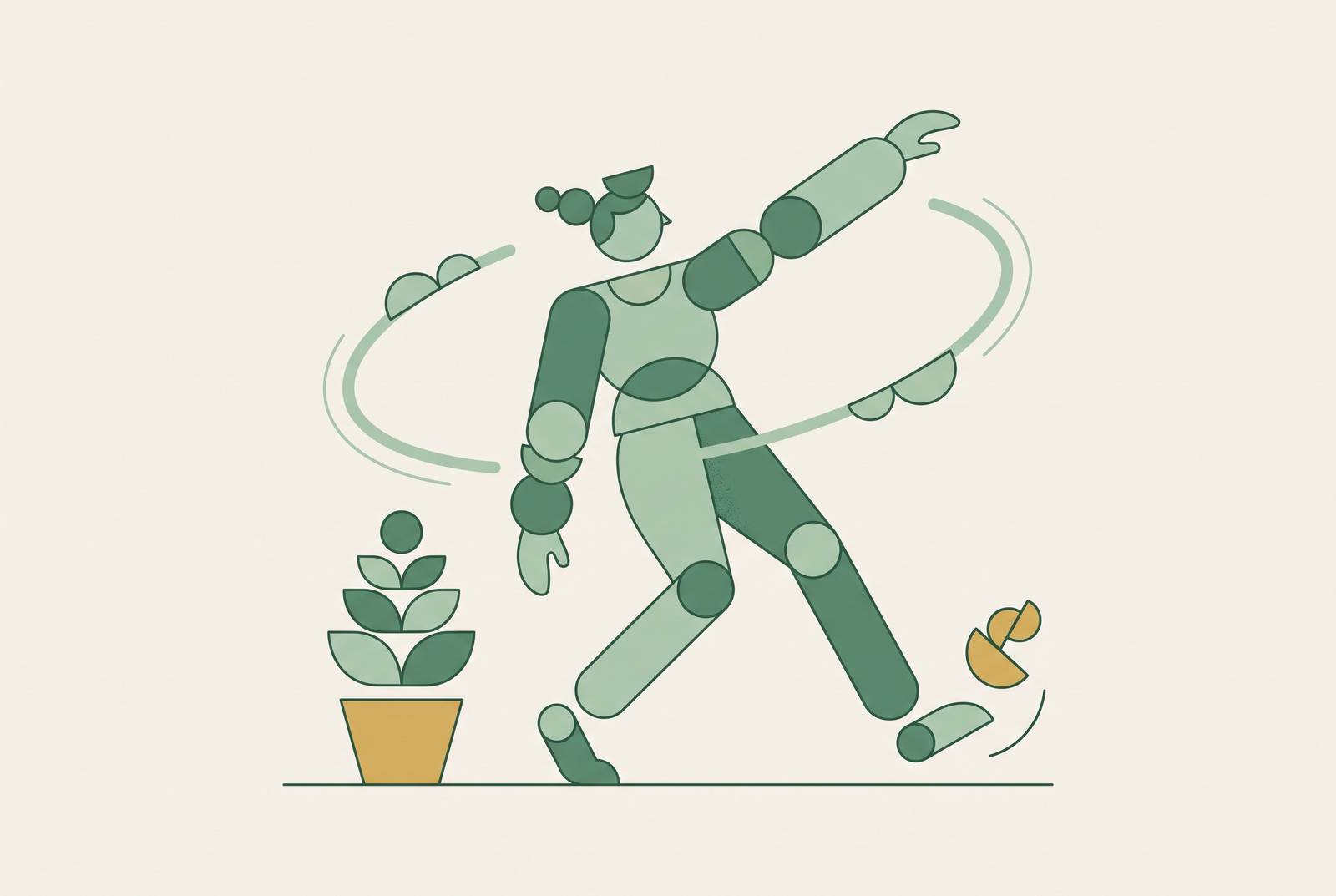
Hating the treadmill doesn't mean a person hates movement; it means the format they've been handed doesn't fit how their body actually wants to move. Biomechanist Katy Bowman and psychologist Diana Hill lay out the mechanism in their 2024 book, I Know I Should Exercise, But…: a set of invisible rules, things like "exercise only counts if it's 45 minutes" or "there's one correct way to do this," act as mental roadblocks that keep people from movement their body is actually asking for. The Reclaim Your Energy account of 11 years of training backs this up from a personal angle: the real problem wasn't laziness or lack of effort, it was burnout from pushing past what felt sustainable, over and over. It was never a shortage of willpower that held people back, but a format mismatch, and once that gets named, the rest of this piece is really about what to do instead.
How pleasure during movement determines whether someone keeps moving
Whether movement feels good in the moment predicts whether someone comes back to do it again, and that single fact rewrites most of what gets taught about exercise. Enjoyment is the mechanism that decides whether the plan survives contact with real life. When exercise feels good, that positive experience gets linked to the activity itself, which makes a person more likely to seek it out again. Pushing someone past their discomfort threshold before that positive link has a chance to form makes the brain quietly file the activity under "avoid.
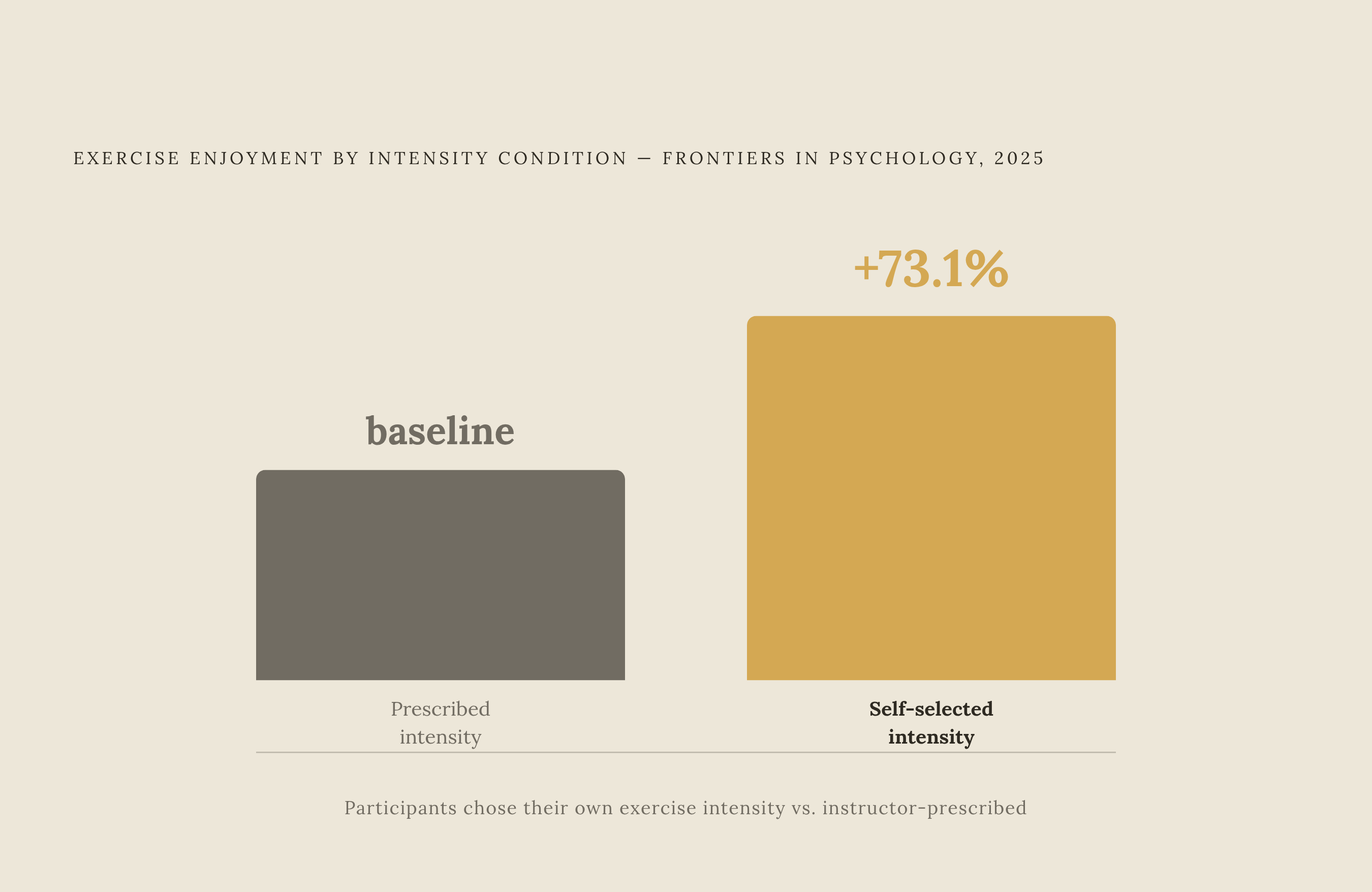
A 2025 study in Frontiers in Psychology tested this directly by comparing self-selected intensity against instructor-prescribed intensity, and the self-selected group reported 73.1% higher exercise enjoyment. Letting people set their own pace raises the pleasure signal that drives people back for more substantially. The same study argued that exercise prescriptions ought to weigh how an activity feels alongside what it does physiologically, marking a real shift in how peer-reviewed research talks about exercise design. None of this is an argument for taking it easy. It's an argument for not poisoning the well before a habit has any chance to take root. The mechanism is simple enough to state in one line and move on: enjoyment during movement predicts whether movement happens again.
What Blue Zone centenarians reveal about lasting movement
The populations with the world's highest concentrations of people who live past 100 didn't get there with gym memberships. People in these regions moved constantly as a byproduct of daily life, a pattern that now carries real academic weight behind it, backed by research rather than popular wellness branding. A study in the Journal of Population Ageing looked directly at the physical activity patterns of Blue Zone centenarians and found they weren't hitting the standard recommendation of 150 minutes of moderate exercise a week. Instead, movement was stitched into the fabric of an ordinary day: walking to a neighbor's house, tending a garden, carrying something heavy from one place to another. Most of what these centenarians did, in fact, falls into the moderate-intensity bucket, just without a single rep counted or a single workout logged.
Sardinian shepherds walk miles daily across mountainous terrain as part of tending their flocks. Okinawan elders rise from and lower themselves to floor mats dozens of times a day, which builds the kind of squatting strength a gym program might chase with a barbell, except here it's just how furniture works. None of this is exotic. It's ordinary life, repeated daily for decades, and the longevity data shows that this repetition builds health outcomes comparable to, or exceeding, programs built around intensity. Movement woven into daily purpose outlasts movement bolted on as a separate task.
How NEAT explains informal movement's health outcomes
There's a name for the kind of movement Blue Zone centenarians were doing, and it has nothing to do with sets or reps. Research published in Mayo Clinic Proceedings found that high-effect NEAT movements can add up to an extra 2,000 kcal of expenditure per day on top of basal metabolic rate. That's a full second shift of calorie burn, done without ever stepping into a gym.
The benefits don't stop at the scale. NEAT research links this kind of everyday movement to a reduced occurrence of metabolic syndrome, fewer cardiovascular events, and lower all-cause mortality, and separate research on desk-based work environments proposes that small, repeated increments of NEAT build toward real health gains over time, especially for people stuck at a desk all day. Dancing around the kitchen to a favorite playlist counts. So does roughhousing with a dog, pulling weeds, cleaning the house with more enthusiasm than strictly necessary, wandering around with a camera, or pacing the room during a phone call. Riding a bike or an e-bike to work folds movement into a commute that has to happen anyway, no separate workout block required. None of this needs a tracker to count. It needs recognition that it was already doing something.
The limits of informal movement
Everyday movement earns its keep for the heart and the metabolism, but it doesn't do everything a body needs, and pretending otherwise would undercut the whole argument. Most of the research on NEAT focuses on metabolic and cardiovascular outcomes, and musculoskeletal effects in people who rely purely on informal movement haven't been studied nearly as closely. A gardener's hips and a walker's calves get plenty of attention. Upper-body strength, bone loading, power output, these tend to go underserved when the day's movement is all errands and no effort. A complete movement routine still benefits from strength challenges, balance and stability drills, work on spinal alignment, joint range of motion, and short bursts of real power, categories that a day of chores doesn't always hit evenly.
There's a useful fix buried in intensity research. A 2026 study in the Journal of Sport and Exercise Psychology found that the drop in enjoyment that usually comes with higher-intensity exercise can be softened by shortening the duration, meaning short, sharp bursts of effort beat long, grinding moderate sessions for keeping both enjoyment and physical benefit on the table. Yoga offers a working example of the same principle in practice. A meta-analysis covering 168 randomized controlled trials found a dropout rate of just 11.42%, far below the dropout rates reported for conventional gyms, which suggests self-directed, gentler practices hold onto participants at a much higher rate. For someone coming from the couch, informal movement is a massive upgrade on its own. For someone already active, a little deliberate loading in the gaps, a few minutes of real strength work, some bursts of intensity, fills out the picture without requiring a gym membership or a abandonment of the enjoyment principle that got them moving in the first place.
Movement practices that work because they have another reason to exist besides exercise
The common thread across the practices that actually stick: movement happens as a side effect of something else the person already wanted to do, not as a scheduled task. Nobody needs willpower to keep doing something they were going to do anyway.
Walking works the whole body without any equipment and scales to however much energy is available that day. One fitness resource from BCBS NC describes power walking as a starting point that led to sustained daily consistency and noticeable results for the author. Walking gets easier to sustain when it's attached to something else: a phone call taken on foot, a dog that needs walking regardless of mood, a photography walk, a stroll after dinner. Each version gives the walk a reason to happen that has nothing to do with burning calories.
Dancing needs no class and no studio. An unplanned dance session in the kitchen while dinner cooks counts just as much as a structured class. Roundups from Hydrow and BCBS NC both list dancing among the top options for people who don't enjoy conventional exercise, with formal styles ranging from ballet and jazz to tap, hip-hop, salsa, ballroom, and belly dancing available for anyone who wants structure without a gym attached.
Gardening and yard work build in digging, bending, lifting, and squatting as a natural part of the task, not an add-on. The garden itself is the reason to be outside, and the physical demands come along for free. Both Hydrow and BCBS NC name gardening as dependable, low-friction movement with real physical payoff.
Hiking and time outdoors add a mood boost that a treadmill can't match, and uneven terrain supplies cardiovascular and strength demands without anyone writing a program for it. Hydrow and BCBS NC both single out hiking as one of the strongest options for people who find gyms off-putting.
Informal and recreational sport carries its own research behind it. An Australian study combining observation, survey, interview, and focus group data found that informal sport participation supports both physical and mental health while building social connection, and the researchers concluded that local governments and health groups could make better use of existing infrastructure and the self-organizing nature of informal sport to improve public health and reduce health inequities. Recreational leagues in basketball, softball, and similar sports exist in most towns, and the social pull often does more to keep people showing up than any training plan could.
Active play with kids, pets, or a makeshift obstacle course turns movement into a game instead of a chore. Children move nonstop by nature, so joining in is movement without having to decide to exercise. One roundup from The Healthy points to neighborhood obstacle courses built from ordinary playground equipment, monkey bars, benches, balance beams, as a way to combine physical effort with problem-solving that builds confidence, no gym required.
Mobility and stretching as a daily baseline fill the gap the earlier section flagged. A short mobility routine in the morning, gentle stretching before bed, or a few minutes of movement between work blocks keeps the musculoskeletal side from falling behind. The Reclaim Your Energy account treats mobility as non-negotiable maintenance, arguing that skipping it causes bodies to end up stiff and achy, which then makes every other kind of movement harder to start.
Simple strength work, done consistently, rounds out the list. Light to moderate weights, full-body sessions, the same lifts repeated week after week, the goal here isn't exhaustion, it's stopping while there's still energy left in the tank. The Reclaim Your Energy framework argues that sticking with the same routine two or three times a week cuts out decision fatigue entirely, letting consistency build quietly in the background instead of demanding fresh motivation every single time.
Why movement with someone else lasts longer
Nearly every practice above gets easier to keep up when there's another person involved, because shared activity gives movement a second reason to happen beyond any fitness goal. The Australian informal sport study found social connection to be one of the clear, documented outcomes of informal participation, with the activity and the relationship feeding each other rather than competing for attention. A walking phone call, a game of catch with a kid, a rec league softball game, a night of dancing, all of these carry a built-in social element, and for anyone who struggles to exercise alone, that's the design feature doing the real work of keeping them coming back.
Two people don't need identical schedules or identical fitness levels to support each other's consistency. A photo texted after a walk, a quick check-in about whether the morning mobility routine happened, a lighthearted bet over who manages to get outside more days this week, all of it keeps the connection alive without requiring both people to move in lockstep. Shared habits tend to survive longer than solo resolutions, and the kind of accountability that actually works feels like support, not supervision. A simple, shared weekly goal, one walk together, one outdoor activity, is far easier to pick back up after a missed week than any complicated tracking system with boxes to check and streaks to protect.
What matters most is celebrating that the activity happened at all, not measuring how well it went. A photo from a garden session or a coffee shared after a walk is proof that two people showed up for each other, which carries more weight long-term than any number on a screen. The movement practice that lasts is rarely the most efficient one on paper.
Sources
- Movement for People Who Hate Fitness Culture
- Working Out for People Who Hate Exercise: 10 Best Exercises
- Exercises for people who hate working out
- The Best Workouts for People Who Hate Exercise
- Frontiers
- Non-exercise activity thermogenesis in the workplace: The office is on fire
- Non-Exercise Activity Thermogenesis
- Lessons Learned From Blue Zones, Lifestyle Medicine Pillars and Beyond: An Update on the Contributions of Behavior and Genetics to Wellbeing and Longevity