Making Exercise Feel Like Something You Both Actually Want to Do Before the Wedding
Couples who actually enjoy exercising together stick with it before the wedding.
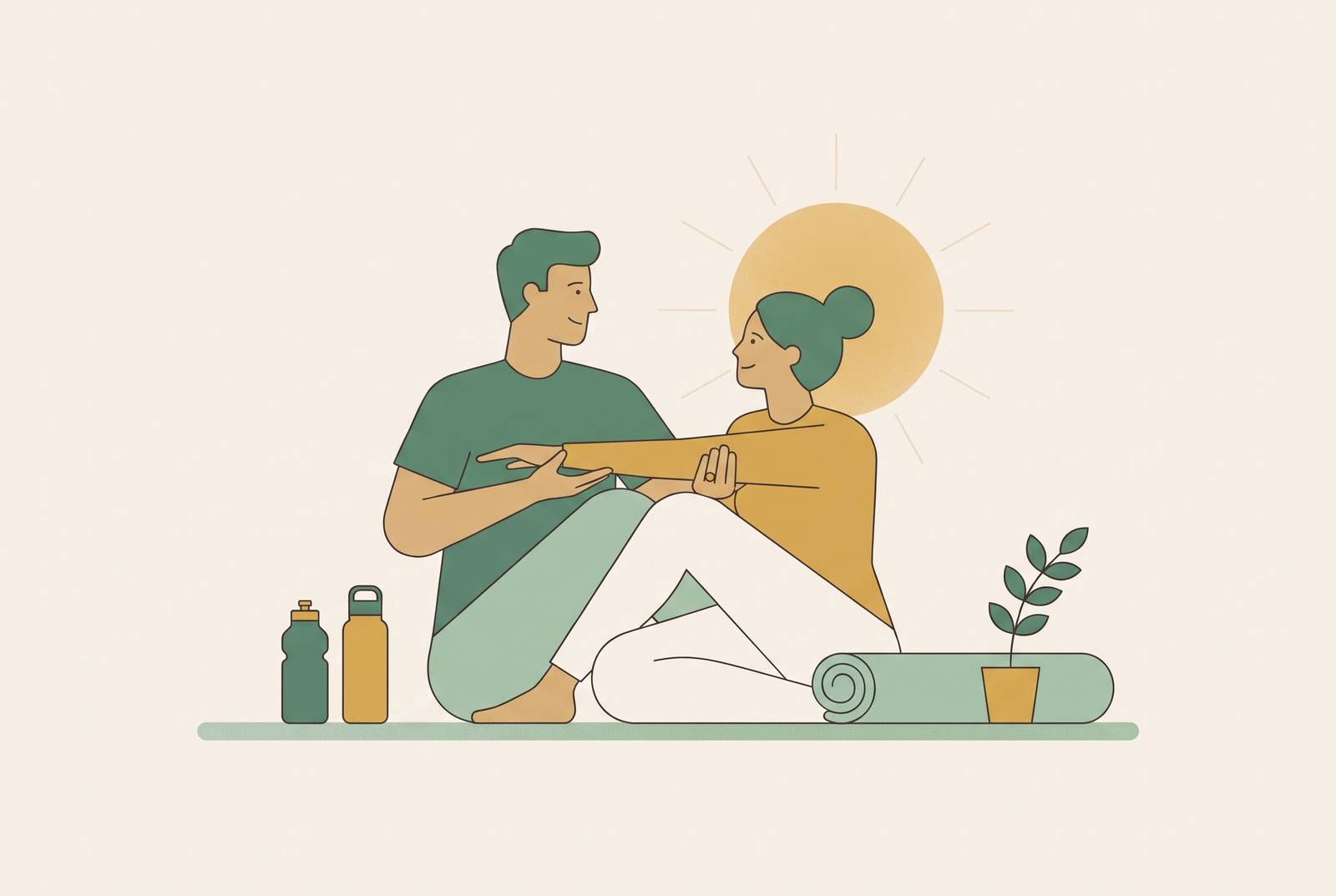
The best workout plan for engaged couples before the wedding is one both partners enjoy enough to repeat, with goals suited to each person and encouragement. Starting three to six months out gives that routine room to become a habit. The aim is to look and feel good on the wedding day without turning exercise into one more task both partners dread.
Why the engagement period breaks most fitness routines before they start
Wedding planning fills the calendar with vendor meetings, outfit fittings, tastings, and decisions about the guest list before an exercise routine has time to take hold. Those appointments feel required, while a workout feels movable. A Tuesday session can survive low enthusiasm, but it cannot survive being the thing that gets displaced whenever another commitment appears. The obstacle is not necessarily weak willpower or a poor program, but a schedule that keeps voting exercise off the island.
That distinction changes what a useful plan looks like. Treating workouts as fixed appointments gives them protection that an intention to exercise “when things calm down” never gets. Calm is not a reliable wedding vendor. For couples facing constant disruption, the solution has to be simpler to fit into the week and more social than a solo training program that depends entirely on personal resolve.
What actually keeps couples exercising is enjoyment, not rigor
Weyland et al. (2020) link positive feelings during exercise with lasting automaticity, the point at which showing up becomes more habitual and less of a fresh negotiation. An activity both partners want to return to has an advantage over one they endure only because the wedding date is approaching.
The obvious objection is that enjoyable workouts might be less effective than a structured program. But those are not opposites. A plan can have structure and still be fun, while even the best program does little beyond taking up space on the calendar if the couple drops it after three weeks. A workout that works fairly well and gets done week after week is the better choice.
How exercising together strengthens the relationship, not just the body
Research published in Family Relations in August 2026 found that shared exercise was associated with positive marital communication and lower conflict in a large sample of young married U.S. couples. The associations were somewhat stronger than those for individual exercise, though the difference was not statistically significant. Couples with stronger relationships may be more likely to exercise together, exercising together may help their relationships, or both may be true. The authors suggest it could have a place in marriage education and counseling.
Dr. David Moore, director of Trauma and Acute Care Surgical Psychology Services at Henry Ford Hospital, notes that exercising with a partner increases the likelihood of the behavior becoming habitual and intensifies the emotional response during the activity. That makes the quality of the experience important. A shared workout offers engaged couples time together that is not another meeting about their wedding. Nobody has to work out who sits where mid-squat. The value extends beyond appearance because the couple gets to practice encouragement, teamwork, and doing something for themselves during a period when logistics can dominate their time together.
Why starting three to six months out changes what's possible
Starting three to six months before the wedding creates room for repetition, interruptions, and a routine that develops gradually. The deadline supplies a reason to begin, and the partner supplies company through the unglamorous middle. For sustainable changes in muscle tone and energy, a six-to-nine-month runway allows more time. Neither window needs to become a countdown to panic.
For couples pursuing a change in shape, a practical milestone is to aim for that target by the first dress or suit fitting, then shift toward maintenance. That separates preparation from a late push that risks injury or exhaustion. The final stretch has enough moving parts already. It also lets the couple use the routine to keep feeling well after the fitting, free from a growing rush to change their shape.
Research tracking new gym members identified four or more sessions per week for at least six weeks as a minimum threshold for exercise to become automatic. At first, it still takes effort to get to a session, so support helps most before showing up starts to feel normal.
What makes accountability feel supportive instead of surveillance
Research published in the British Journal of Health Psychology found that emotional support, including encouragement, empathy, and celebrating progress, was more important for maintaining exercise habits than practical support such as sharing workout plans. A partner's response is therefore part of the routine. There is a difference between noticing effort and grading it. Encouragement leaves room for a hard week, while being judged all the time can make exercise one more thing someone feels they are getting wrong. A fiancé is not an unpaid compliance department.
That distinction also works when partners exercise separately. Different work schedules do not rule out shared accountability, provided there is an easy way to make participation visible. SweatCam fits that role through photo check-ins rather than duration, metrics, or scores. For a couple trying to establish a habit, that keeps the shared conversation centered on the behavior each person is trying to repeat.
A small wager can add playfulness to that loop. Missing a weekly goal might mean an agreed-upon forfeit such as dinner or a chore, while meeting it gives the couple a shared win. The stakes stay deliberately low. The useful distinction is mutual agreement rather than one partner inventing penalties for the other. A missed goal should open a conversation.
How photo check-ins do something charts and dashboards cannot
A photo check-in answers a narrower question than a training dashboard. It makes showing up visible without requiring a detailed account of the session. The objection that it is “just pictures” is accurate. A check-in serves the purpose of social reinforcement, leaving workout type, duration, and quantitative progress to a training log.
That visibility can connect workouts separated by an entire workday. One user's description of SweatCam illustrates the pattern, with one partner posting a morning gym photo and the other seeing it during work before exercising afterward. The sessions are separate, but the encouragement travels. A partner's participation provides a useful signal that they made time to exercise. This keeps attention on an action people control.
Placing a week-one photo beside a week-eight photo can make gradual changes easier to notice than daily mirror checks do. Yet pictures are not neutral for everyone. For someone with a history of disordered eating or difficult body image, strength gains, how clothes fit, or energy levels may be better starting points.
The app also has practical friction points. It has frozen during photo-taking and can interrupt music playback, while some users feel uncomfortable using the back camera where it might capture other gym members. A low-friction check-in loses some of its appeal when taking it becomes the awkward part of the workout.
Building a plan that works when one partner is a beginner and the other is not
Different fitness histories are normal. Making both partners do the same workouts can leave the experienced partner with too little to do and the beginner with too much. Neither outcome helps the shared habit. It works better when each person does the amount of training that suits them and both have the same accountability for meeting their own weekly goal. Together does not have to mean matching weights, speed, or experience.
The American College of Sports Medicine says two to three resistance training sessions per week and moderate aerobic activity are good ways for beginners to start. Start small and let consistency establish the foundation over several weeks. A simple beginner week can therefore center on those resistance sessions with moderate aerobic activity, while the experienced partner follows a program suited to their background. Their schedules need not be identical. The common element is the check-in confirming that each person completed their own commitment.
Experience can help consistency, but it does not give one partner ownership of the process. Beginners may have less accumulated boredom or fewer entrenched bad habits and can match or exceed experienced exercisers in long-term adherence. Shared classes or outdoor activities can also give the couple experiences where enjoying the time together takes precedence over matching performance.
Activities that are genuinely enjoyable for couples, not just effective on paper
For couples who like being outdoors, running or cycling can make exercise feel like shared time. Kayaking and mountain biking are other ways to change things up once the couple is used to being active. Variety around the 3–5 month mark can help keep an existing routine engaging after its first burst of enthusiasm fades. The activity earns its place if both partners still want to do it in week seven.
For couples who like a class, high-energy dance lessons offer cardio and help them get ready for their first dance. That is one of the few wedding tasks with a better soundtrack than email. Group classes give the couple another way to work out together without having to plan each session themselves. A mix of strength training, cardio, and yoga also gives exercise more than one role, including building strength, aerobic work, and managing stress and flexibility.
For couples starting from scratch or avoiding a gym membership, bodyweight circuits at home, partner yoga, and joint running or cycling remove the need to coordinate with a facility. Fewer arrangements mean fewer chances for plans to unravel. Cooking healthy meals together can extend the same practice of intention and mutual investment without adding gym time.
The week before the wedding is a different case. More conservative workouts help keep the emphasis on arriving rested. By then, novelty has less to offer than familiarity. The wedding aisle does not need to double as a recovery walk.
Why a consistent, enjoyable habit now is the actual wedding gift to each other
A wedding gives the routine a deadline, but marriage gives it somewhere to go afterward. Once the planning appointments disappear, exercise can remain a shared practice rather than a preparation project whose purpose has expired. That changes the emotional stakes of building it. The couple is not only pursuing a particular look, but learning how to support each other's health without making affection feel conditional on performance. There is no reason that skill has to retire after the photos.
The difficult weeks are part of that learning. A missed goal can prompt reflection about what got in the way, while a playful wager or check-in keeps the commitment visible without turning a skipped session into a relationship failure. The response becomes part of the habit, too. Couples who make room for encouragement and small celebrations are practicing how to return to a shared intention when life interrupts it. Marriage will give them more chances to work on that, even without a guest list.
After the wedding, there can still be a class to attend, a ride to share, or a photo arriving during a busy workday. It can simply mean making time for a life together.