When One Partner Is a Runner and the Other Is a Beginner
How mixed-ability running partners can train together without friction.
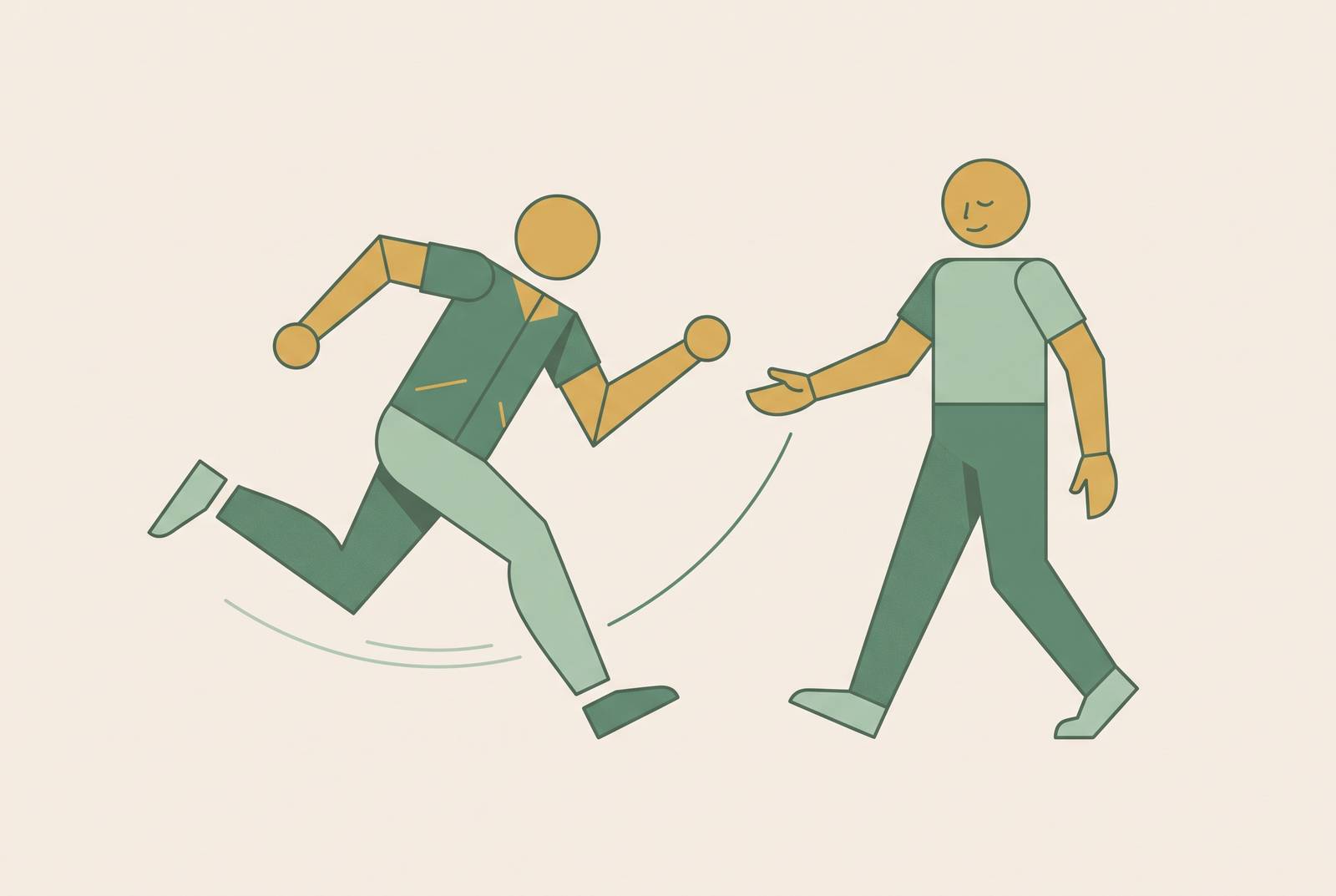
For an engaged couple with one experienced runner and one beginner, a workable pre-wedding workout plan combines shared easy runs, sessions at separate paces, and harder solo efforts for the experienced partner. “When One Partner Is a Runner and the Other Is a Beginner” is about building that shared habit.
An experienced runner and a beginner can train together without either holding the other back by mixing three session formats across the week: a shared easy run governed by the beginner's conversational pace, an out-and-back where both partners run in opposite directions for the same agreed time and return at their own speed, and a loop on a circular route where each person settles into their own effort and passes the other along the way. On separate days, the experienced runner takes harder solo outings, while the beginner's mileage grows gradually rather than matching the faster partner's total workload. A short conversation before each outing, settling whether the run is about a hard effort or time together and whether both will stay side by side or meet at the finish, prevents most of the friction that makes mixed-level running feel like a negotiation in motion. The pace gap is not the problem to solve; dropping out is.
Why the pace gap is a structural problem, not a motivation problem
The run starts well, but within five minutes someone feels guilty and someone feels irritated. The beginner is struggling to keep up, while the experienced runner is wondering whether slowing down any further still counts as running. Neither wanted an argument before breakfast. Yet both can read the situation as a personal slight, with one feeling dragged and the other feeling held back. The cause comes before the feelings, though, because the two bodies are prepared for different loads.
Cardiovascular fitness can start to change in days, while bones and tendons take months to adapt. Because of that mismatch, a beginner can breathe fairly easily while putting more stress on connective tissue than it is ready to take. The faster partner’s easy pace can therefore be too demanding for the beginner, even when both are trying to be considerate. Good intentions cannot speed up tendon adaptation. Trying to bring someone “up to speed” too quickly invites the familiar too-fast, too-far, too-soon problems, including shin splints, runner’s knee, and early burnout.
What the beginner's body actually needs in the first two months
For the beginner, the first several weeks are about building an aerobic base at conversational effort, roughly Zone 2 work. The useful word here is conversational. On a run together, both people need enough breath to talk, even if the beginner can manage a brave nod when the faster partner asks whether everything is fine. Keeping effort easy gives the beginner room to build fitness without chasing a pace their body is not ready to support. It also makes conversation part of the run rather than a privilege reserved for the fitter person.
Distance needs the same patience as speed. Mileage should rise gradually, because adding too much too soon is a common cause of stress fractures and IT band syndrome in new runners. A manageable heart rate is not permission to pile on distance, given the slower adaptation of bones and tendons. Feeling fitter is encouraging, but it is not the only signal that counts. The aim in these first two months is to build something durable, rather than squeeze the most running possible into the gap before the wedding.
The beginner’s conversational effort sets the pace when both partners choose to run side by side, while the other formats leave each person free to work at their own level. This is a way to make the next run possible without asking enthusiasm to do the work of physical adaptation. A wedding date can set the schedule, but it cannot bargain with connective tissue.
What the experienced runner actually loses — and gains — by slowing down
If you intended to do a hard workout, an easy outing with your partner will not deliver the same session. You are giving up that particular training opportunity. Pretending otherwise makes a fair give-and-take sound like a motivational poster, and nobody needs one of those following them around the park. Couples can decide whether every shared run needs to serve the purpose of a hard workout.
An easier run has a legitimate training role. It gives the runner aerobic stimulus and active recovery, the same kind of work elite runners do between harder efforts. A recovery run does not become counterfeit because your partner happens to be enjoying it too.
A week can include conversational runs together, an outing in the same place at each person’s own pace, and harder solo runs for the experienced runner on other days. The beginner’s mileage still grows gradually, rather than copying the experienced partner’s total workload. This protects room for your own progress. It also means time with your partner is not continually competing with the workout you secretly wish you were doing.
How can an experienced runner and a beginner train together without one holding the other back?
A shared easy run is the option for days when conversation is the point and recovery work fits the experienced runner’s training. Before leaving, agree that the beginner’s conversational effort will govern the pace and that this is not a hard session in disguise. The beginner builds an aerobic base, while the experienced runner gets an easy training day without having to pretend it is speed work. This format suits the run where being side by side is worth more than covering different distances. It stops working when one person agrees to easy in the kitchen and starts renegotiating it on the pavement.
An out-and-back with a shared timer gives both partners freedom to run at their own intensity. Before leaving, agree on the starting point, the time to turn around, and the plan to head out in opposite directions. Each person runs for the agreed time, turns simultaneously, and returns at their own speed, typically arriving back within a short window of the other. The reunion is built into the route. Unlike a side-by-side run, this format does not require the beginner to chase or the experienced runner to keep checking over a shoulder.
With the loop method, both runners use the same space without having to stay side by side the whole time. Before leaving, choose a circular park path and agree on when and where to finish together. Both start together, settle into their own pace, and can offer encouragement when they pass each other. There is still a social thread. The experienced runner can cover more ground while the beginner stays within a manageable effort, and neither needs to treat the other’s pace as a correction to their own. This is togetherness without turning the run into a three-legged race.
The pre-run conversation that prevents most running arguments
These formats only work when both partners know which kind of run they have agreed to. Most friction begins with an expectation that never made it out loud, such as one person anticipating a hard effort while the other pictured a relaxed catch-up. Both versions sound reasonable in isolation. When both partners take those expectations onto the same route without discussion, every change of pace can look like a refusal to cooperate. A short talk before leaving gives both people an agreed reason for the run.
To put that conversation into practice, a couple can ask, “Is tonight about a hard effort or time together?” They can then ask, “Are the plans to stay side by side or meet again at the finish? Neither question needs a summit meeting. Their value lies in settling the choice before breathing gets harder and patience gets thinner. If the answers differ, the separate-pace formats offer a way to share the outing without pretending both people want the same workout.
A third question is, “Does cheering help, or would quiet company feel better?” Some runners enjoy verbal encouragement, while others hear it as distraction or pressure, even when it is warmly meant. Support is not one-size-fits-all sportswear. Agreeing on its form prevents the experienced partner’s enthusiasm from landing as an instruction to push harder. Over time, this short conversation becomes part of the habit itself, as ordinary as putting on running shoes.
Why logging the run as a shared photo works better than logging it as a performance metric
A pace chart is useful for tracking performance, but it is an awkward place to recognize a mixed-level couple’s shared effort. Pace, distance, and split times show how far apart the partners are after every run. The experienced runner may see a run that went well, while the beginner sees proof of being behind. When the purpose of the shared record is accountability, those numbers can answer the wrong question.
A photo check-in shifts the question from how fast to whether both people showed up. The beginner can complete a shorter run and the experienced partner a longer one, then record the same achievement without pretending the workouts were identical. SweatCam is one tool for putting that photo-check-in approach into practice. The principle is more important than the product. Recognition attaches to participation, so the beginner does not have to earn a place in the shared record through better splits.
Taking a photo at the start also brings the commitment into the present. Sending it lets another person share in the plan to exercise, so the plan has a place in their lives beyond a stored number. Across weeks, the photos become a visible record of the habit taking shape. They can capture changes in definition and posture, as well as the energy of the occasion, while pace may barely move in the early weeks.
For couples who enjoy a small wager, the same approach can include an agreed weekly goal and a modest consequence, such as buying dinner if it is missed. The target is consistency. Hitting the goal simply means both partners are safe, rather than creating a winner who exercised better and a loser who needs to catch up. Wedding planning already offers enough opportunities to turn a spreadsheet into a contact sport.
How long this actually takes, and what to expect in the first six months
The first few weeks can feel good before the habit has taken hold. Singh et al.’s 2024 systematic review found that health habit formation usually takes two to five months, which helps explain why a 21-day challenge may end before the behavior has had time to stick. An engaged couple should not read early enthusiasm as proof that the routine will now run itself, or a difficult week as proof that the plan has failed. Consistency needs time to become ordinary.
The beginner may still see progress long before the habit feels automatic. Neural and cardiovascular adaptation is rapid in the first year, so the pace gap can narrow naturally as the beginner develops. There is no need to force that process by borrowing the experienced partner’s speed. Nor does improvement create an obligation to make every shared run faster. The easy days can keep their purpose even as both runners become capable of more.
By the middle months, the useful question is whether the arrangement still works for both people. The beginner needs room to improve without feeling judged, while the experienced partner needs harder solo work to keep its place in the plan. Shared commitment can help sustain that balance because a run is harder to skip when someone else is already putting on their shoes.
By month six, success need not look like matching watches. A couple still running together at different paces, pursuing different goals, and logging their workouts in a photo has built a durable routine and a shared commitment that solo running cannot provide on its own. The wedding can be a reason to start without becoming the deadline for identical fitness.
The pace gap is not the problem to solve. Dropping out is.