Staying Active While Traveling for Work
How business travelers can build exercise habits that survive packed schedules and hotel rooms.

That is not a discipline problem. That is just what business travel does, on a schedule you can practically set a watch to. Business travel causes a once-a-year fluke that throws off the routine on a recurring basis. It is a recurring condition, and most business travelers already know it: a majority say they are less likely to exercise on the road than they are at home. IPX1031's travel outlook report found that 36% of Americans planned to travel for business in 2025, representing a large share of the workforce regularly facing this disruption. Wellhub's Return on Wellbeing 2026 found that American workers take an enormous number of long-distance business trips a year, meaning this is a recurring, not occasional, condition.
What travel does to the body and mind
Start with the plane, because the body starts losing ground before the trip even really begins. Long-haul flights force hours of prolonged sitting, and research published in Experimental Physiology in 2025 found that this kind of sitting can acutely reduce blood flow in the lower limbs while pushing brachial blood pressure up. Low cabin oxygen adds another layer to the risk of blood clots, a well-known hazard of sitting still for that long. When enough of these trips stack on top of each other, the damage stops being anecdotal: a World Bank study found that international business travelers ran health plan costs 70% higher than colleagues who stayed home, with the odds of developing a noncommunicable disease climbing right alongside travel frequency.
The mind takes its own hit, separate from the body's. Back-to-back meetings, a full day of decisions, presentations that need sharp thinking on four hours of sleep. All of it draws from the same mental account that a workout routine normally runs on, so travel fatigue is cognitive as much as it is physical. Burnout, meanwhile, is not a niche complaint. Wellhub's Work-Life Wellness Report 2026 found that the vast majority of employees report burnout symptoms within the past year, and close to four in ten feel them at least weekly, and travel piles right on top of that load. Food follows the same pattern: 44 percent of business travelers say they eat worse on the road than they do at home. None of this is a character flaw showing up in a hotel room. It is sedentary hours, disrupted sleep, bad food, and mental fatigue all leaning on each other at once. Fixes built on sheer willpower tend to fold under that weight.
The gap between intending to exercise and doing it
Cornell's School of Hotel Administration found that a substantial share of hotel guests plan to hit the gym during their stay. Far fewer actually do. Sit with that for a second, because it is not a motivation story. Motivation, on paper, is fine. Execution is where the whole thing falls apart, and BCD Travel's 2025 numbers show the same crack: 51% of business travelers actively look for hotels with a gym, pool, or spa when they book, but only 41% actually use the gym once they're there. Only two in ten travelers manage to exercise regularly on the road, though almost half manage it sometimes, showing the intention is there, it just keeps losing to circumstance.
Part of the loss comes from a very specific mental trap: all-or-nothing thinking. On the road, the full set of conditions (the right equipment, the usual hour, the familiar gym) rarely lines up. The fix is not more willpower. It is redefining what counts as a win during a work trip.
Choosing where to stay as a fitness decision
Staying active on a work trip starts before the trip does, at the moment of booking. Picking a hotel with a gym, pool, or fitness center removes the single most common logistical excuse before it ever gets a chance to exist. Most booking platforms let travelers filter for exactly this, and a quick call or email to confirm the gym's actual hours closes the gap between a facility existing and a facility getting used, especially since access to employer-sponsored wellness programs has grown to 85% of workers as of 2025, up from 78% three years earlier.
25% of business travelers say they'd like exercise gear provided in their hotel room, but only about 10% of employers currently offer that. So don't count on it showing up. Pack around the gap instead. If the hotel gym turns out to be a broken treadmill and a single ten-pound dumbbell, local parks, running trails, and drop-in fitness studios (plenty offer a free first class) all extend the options past the hotel's front desk. And for travelers who find solo accountability harder than the workout itself, hotels and resorts running group fitness classes offer both structure and a room full of people who happen to be sweating at the same time. That's not nothing when you're eating dinner alone in a different city for the fourth night running.
Building a workout that travels in a carry-on
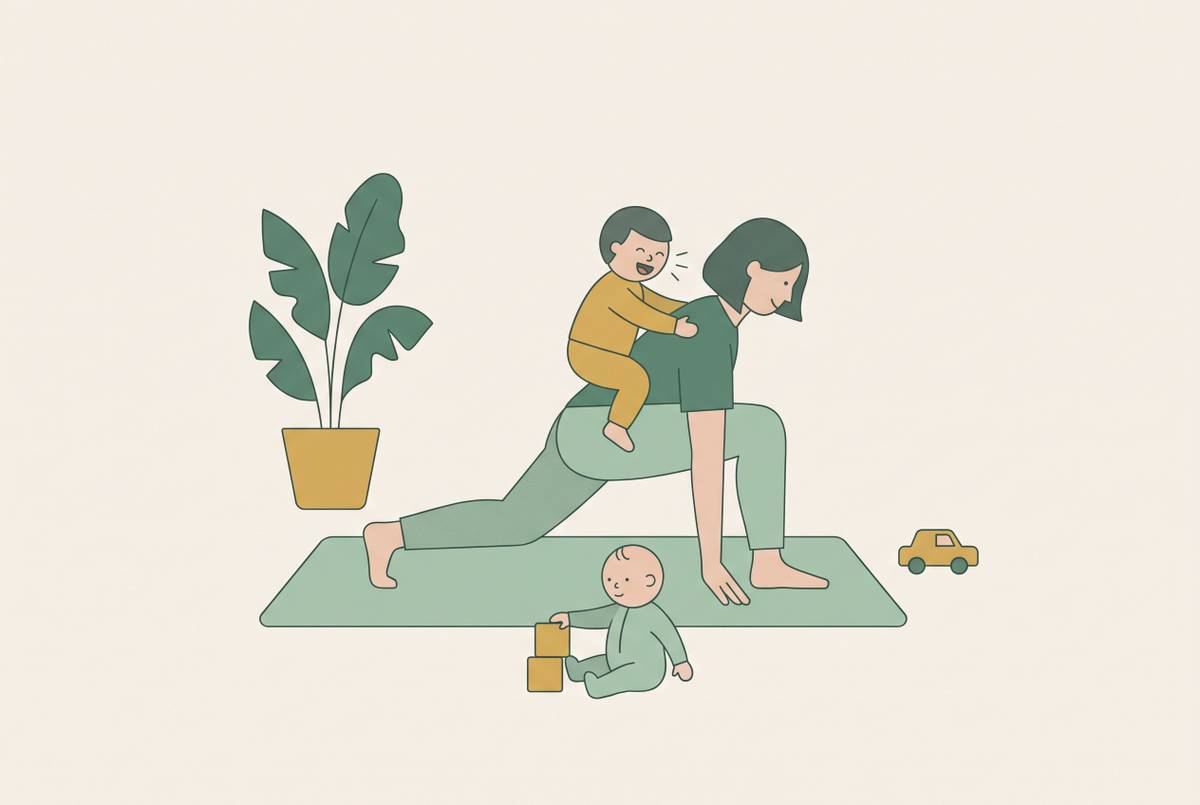
The most reliable workout on the road needs zero equipment. Squats, lunges, push-ups, planks, and glute bridges add up to a full session on a stretch of hotel carpet, and there's no waiting for a machine because there is no machine.
The data backs up what travelers are already reaching for. Hotel exercise rooms and equipment top the list of how business travelers actually maintain their routines on the road, with hotel pools close behind, followed by in-room basics like yoga mats and stationary bikes, according to a CWT/Artemis Strategy Group survey of a large sample of business travelers. HIIT and other metabolic conditioning formats fit the travel constraint almost perfectly: short, intense, and equipment-optional. And because decision fatigue is real after a long travel day, saving one or two go-to digital workouts before departure means there's no scrolling through an app trying to decide what today's session even is; Kaiser Permanente guidance cites fitness apps offering structured bodyweight routines as a widely cited entry point. Stretching and mobility work deserve a spot in that same routine as the direct counter to the stiffness a long flight and a long meeting day both produce. None of this needs to be impressive. It just needs to happen consistently enough to keep the fitness needle from sliding backward.
Finding movement in the margins of a travel day
Formal workouts aren't the only lever here, and treating them that way undersells how much movement is already sitting inside a normal travel day, waiting to be used. Walking meetings, phone calls taken on foot instead of at a desk, stairs instead of the elevator, a short walk between conference sessions: none of it looks like exercise, and all of it adds up across a day that's otherwise mostly sitting.
Airports, oddly enough, are an asset here rather than dead time. Walking laps around the terminal turns a delay into movement instead of a slow simmer of frustration, and a long enough layover near an airport gym can become an honest training window rather than just a place to charge a phone. Once on the ground, walking to dinner instead of ordering a rideshare, asking the concierge about a nearby park or running trail, or booking a walking or cycling tour of wherever the trip landed all convert sightseeing into something that counts. There's already motivation sitting right there waiting to be pointed in the right direction: a large majority of corporate travelers try to fit leisure activities into a work trip. The itch to see the city is already there, it just needs to go toward a walking tour instead of a hotel bar. A step-counting app with a daily target is about as low-friction as this gets, especially on the days when a real workout just isn't in the cards.
Scheduling and habits that protect consistency on the road
Morning is the time slot that actually survives contact with a travel day. Exercise first thing, before meetings start eating the schedule alive, and the day can't crowd it out later because it's already done. Deciding the workout in advance matters just as much as picking the time. Not a vague plan to "exercise," but a specific session already chosen, because that removes the moment of decision fatigue that so often kills the whole thing after a long flight.
Treating the travel routine as a scaled-down version of the home routine, rather than some separate system invented for hotel rooms, keeps the exercises familiar even when the environment isn't, and that familiarity lowers the activation energy needed to actually start. Sleep deserves equal billing here, not an afterthought. Crossing time zones chips away at focus and decision-making, so shifting sleep timing toward the destination a day or two before departure, catching morning daylight on arrival, and keeping a consistent wind-down routine all help the body recalibrate faster. And when a workout gets missed on a genuinely rough travel day, that calls for a shrug. One skipped session is a minor blip the system easily absorbs. It's just a skipped session, and the habit survives as long as the next opportunity actually gets taken.
How nutrition on the road interacts with staying active
Food and fitness aren't separate travel problems, they're the same problem wearing two hats: only 2 in 10 business travelers manage to exercise regularly when traveling, though almost half manage to do so sometimes. A large share of business travelers eat worse on the road than at home, and that's rarely a willpower failure. It's an environment failure: airport terminals aren't exactly stocked with grilled chicken and steamed broccoli. A 2022 study in EXCLI Journal found that people whose meal timing swung by more than two hours between weekdays and weekends carried a meaningfully higher average BMI than people who ate on a consistent schedule, and a business trip is basically a live stress test of that exact pattern, with meals shifting around meetings and time zones all week.
Choosing protein and vegetables first, carrying portable snacks like nuts or protein bars, and dialing back liquid calories from sugary drinks and alcohol all work regardless of cuisine or schedule. Nearly half of business travelers, 47%, already factor healthy dining options into where they book. Nutritional planning starts at the same moment fitness planning does: before the suitcase even gets packed. One bad meal alone isn't the real risk. It's bad meals stacking on top of bad sleep and less movement, all reinforcing each other until the fitness regression that hits most travelers becomes hard to avoid.
Staying connected to a fitness partner or accountability system while away
Working out alone in a different city doesn't have to feel like working out alone. A photo of a hotel-room workout sent to a partner, a quick text after a morning run, a shared step goal for the week: small signals, but they keep a mutual habit alive across a few time zones of distance. A friendly wager (something small, on the line for whoever logs more workouts that week) turns a missed session into a shared joke instead of a private failure, which affects whether the habit survives across time zones.
Simple goals travel better than complicated ones. A target number of workouts, or a daily step count, is easy to text across a time difference in a way that a detailed training program never will be. Frequent travel already carries its own isolation, on top of the usual logistics and unfamiliar hotel ceilings, and knowing someone else is tracking the same goal gives that isolation something to push against. None of this needs to be a personal best. Showing up for a twenty-minute hotel-room workout on a genuinely bad travel week is the whole point, just the fact that it happened.
What employers can do to make travel fitness realistic
Some of this really isn't on the traveler to fix. The American Journal of Preventive Medicine found that burnout alone costs employers approximately $4,000–$21,000 per employee per year, with presenteeism driving the majority of that cost.
The infrastructure is improving, just unevenly. As of 2025, 85% of workers have access to at least one employer-sponsored wellness program, up from 78% three years earlier, though that reach doesn't consistently extend to people who are actually on the road, where the standard on-site perks don't do much good. Wellhub's Return on Wellbeing 2026 report found that the vast majority of organizations already say wellness programs improve productivity and cut healthcare costs, with a positive return reported among those tracking specific program ROI. The case for closing the travel-specific gap isn't really in question at this point. It just needs an employer willing to fund a hotel gym stipend, put exercise gear in the travel budget, or build recovery time into an itinerary instead of packing every hour with meetings and calling it efficient.