Getting Fit Together Before the Wedding Without Overhauling Your Life
Small, consistent habits beat crash diets and double gym sessions before the big day.
Getting fit before a wedding doesn't take a dramatic overhaul. It takes small, shared habits a couple can actually keep up while they're drowning in vendor emails, and those habits pay off in energy and connection, not just how the photos turn out. Understanding why the usual approach, the one plastered across every bridal magazine cover, sets couples up to fail makes clear why it helps to do things differently.
You know the version. Six weeks out, juice cleanse, double gym sessions, a frantic countdown to some idea of a "wedding body." It sounds disciplined. It's actually bad timing dressed up as ambition. Wedding planning is already a sustained stressor: vendor calls, seating charts, fittings, money conversations that go sideways. All of that keeps cortisol elevated, and elevated cortisol changes how the body stores energy, cranks up appetite for the exact foods a crash diet forbids, and slows muscle recovery. An intense training plan stacked on top of that leaves the body more stressed, not stronger. The training becomes just one more deadline piled on top of the others.
Even fitness brands built around body transformation seem to know this on some level. 9Round's wedding fitness guidance leads with slimming down, toning arms, and getting lean, but the quieter note it tucks in about building resilience and boosting mood is what actually matters during an engagement. The crash-plan logic still dominates how weddings get sold to couples, even though it runs directly against what the body needs during the most stressful months of the whole process. There's a better way to approach it, one that a growing number of couples and experts are already catching onto.
What the 2025–2026 shift toward "wellness over weight" looks like in practice
The wedding fitness conversation has moved. Instead of chasing a number on a scale, couples are increasingly chasing energy, confidence, and the ability to get through planning season without falling apart. OurVows's 2025–2026 wedding fitness guide names this directly: the shift is from "shredding for the wedding" to "wellness over weight," and it has become the dominant mindset across current wedding seasons.
Couples are starting six to nine months before the wedding, a longer runway than six frantic weeks. Goals sound different, too: less "fit into a smaller size," more "dance all night without my knees giving out." Functional strength, the kind that gets you through a long reception on your feet, is replacing pure aesthetics as the stated goal. OurVows describes the aim as "entering your new life together with energy and confidence," language that includes both partners and points well past the wedding day itself.
That reframe does real work for couples, not just marketers. When the goal is joint instead of pointed at one person's body, success gets measured by how both people feel, not by a dress size or a suit's waistband. It also gives couples permission to stop treating fitness as a punishment for the cake tasting. A couple that starts early and defines success as "we both feel good" has a target they can hit together, not a deadline one of them inevitably misses.
Why doing it together makes consistency dramatically more likely
Working out together isn't just nicer, it's more durable. A shared workout is harder to cancel than a solo one, because skipping it means letting another person down, not just yourself. FITPASS's pre-wedding couple fitness guide points to studies showing couples who exercise together stick with it more consistently, and consistency is what a wedding-planning calendar threatens most.
The mechanism is simple. A workout on the calendar with one person's name on it is a suggestion. A workout with both names on it is an appointment. That small shift, from intention to obligation, matters enormously during an engagement, when every week brings a new vendor call or a new fire to put out that's happy to eat the hour you'd set aside for yourself. Solo fitness plans are the first thing to get cut when life gets loud. Shared ones have a built-in reason to survive.
There's an obvious objection here: what if one partner is in much better shape, or just way more motivated, than the other? Mismatched fitness levels can make joint training feel like a chore for one person and a babysitting job for the other. The fix is building a shared habit. The Scott Free Clinic's piece on marriage and fitness describes this as building "a shared physical life rather than a shared workout program." Their example: a husband who lifts weights several days a week, a wife who takes a group class, and both of them hiking together on weekends. Neither partner gives up what they like. Fitness still becomes a shared feature of the relationship, not a battleground.
What recent research shows shared exercise does to a relationship beyond the gym
The upside of training together goes well past showing up more often. Research published in Family Relations, using data from 1,693 young married couples in the United States, found that couples who exercised together reported better communication, more effective conflict resolution, and less marital stress than couples who didn't share physical activity. That matters directly for anyone deep in wedding planning, a season that manufactures more opportunities for friction than almost any other stretch of a relationship.
The benefit was specific to shared activity, not just general fitness. Individual exercise alone showed a weaker link to those relationship outcomes than exercise done together. Walking was the most common activity couples reported. The benefit doesn't require a gym membership or specialized equipment. It comes from moving alongside each other regularly.
For an engaged couple, that detail is what makes fitness genuinely useful beyond the wedding photos. Planning a wedding tests communication constantly: budget disagreements, guest list negotiations, family opinions nobody asked for. A habit that measurably improves communication during exactly the season that strains it is a timely, practical benefit, not a wellness platitude. Part of why it works may be structural: the Scott Free Clinic piece notes that side-by-side activity opens up conversation differently than sitting across a table does. Topics that feel loaded in a face-to-face conversation tend to surface more easily when two people are moving in the same direction, literally.
Why starting six or more months out changes what kind of habits are even possible
Timing decides what's even possible. If you start early enough, small, steady habits can build into real change. Wait too long, and intensity becomes the only lever left to pull, which is exactly the trap the first section warned about.
OurVows recommends starting at least six to nine months before the wedding for results that actually hold. FITPASS sets a lower floor, three to six months, as the minimum. The reasoning lines up: OurVows notes that experts recommend a minimum of six months to see lasting changes in muscle tone and energy levels, a window that only exists if a couple starts before the panic phase sets in.
With that kind of lead time, three to five workouts a week, consistent but not punishing, supports real strength and muscle adaptation without sliding into overtraining. It also opens up something crash plans can't: a final stretch before the wedding that shifts away from intensity and toward recovery, mobility, and managing stress, right when planning stress is at its highest and the body needs rest the most. OurVows also suggests aiming to hit a target shape by the first dress or suit fitting, then simply maintaining from there, both so alterations stay accurate and so the final weeks aren't spent chasing last-minute changes.
For couples reading this with four months left, not nine, the math still works in their favor. A modest, consistent habit started today will outperform an intense push that burns out in three weeks. Starting late doesn't mean starting hard; it means starting now, at whatever pace survives the calendar.
The small habits that fit inside a wedding-planning schedule
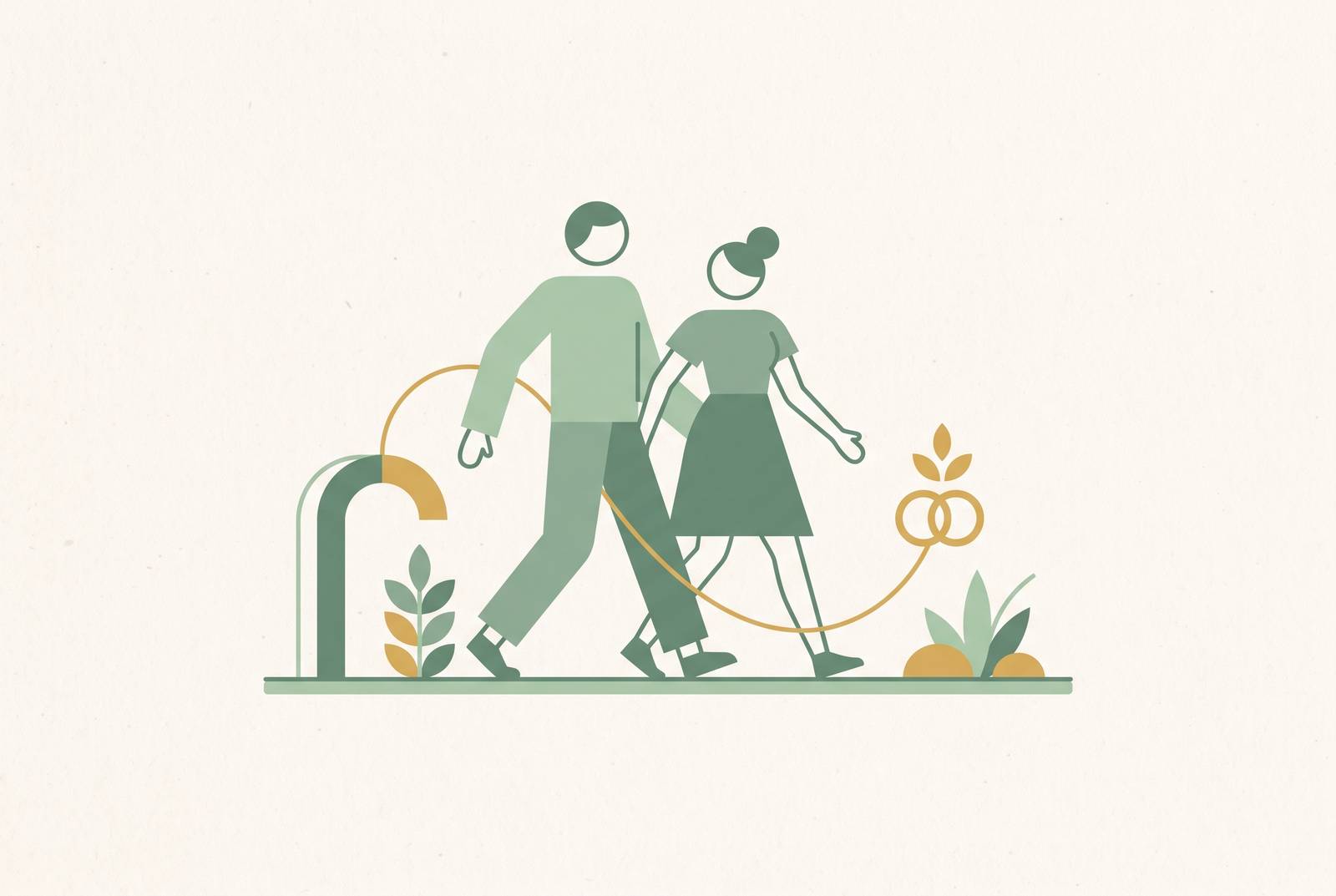
The habits that actually survive wedding planning are the ones that don't need to be scheduled around it. Walking together tops the list for a simple reason: it needs no gym, no equipment, and no fixed block of time, and the Family Relations research found it was the single most common form of shared exercise among couples already. A walk after dinner, a walk while hashing out the seating chart, a walk instead of a car ride to run errands together, all of it counts, and none of it requires planning.
When even a walk feels like too much to carve out, shorter bursts still help. A fifteen-minute high-intensity session still does real work, or you can even use a walking pad while scrolling through venue options or answering wedding emails. OurVows calls this "micro-movement," and the logic holds up: a short burst still helps bring cortisol down, even if a full hour at the gym isn't happening this week.
Dance lessons deserve a mention too, mostly because they're sneaky. Most couples already have dance lessons on the to-do list for the first dance, so there's no extra scheduling involved, and OurVows names choreographed fitness and high-energy dance lessons as one of the bigger 2025 trends precisely because they double as real cardio. It's the rare wedding task that's good for the budget of time and good for the body at the same time.
Eating well shapes how couples feel during the engagement, arguably more than the workouts themselves. OurVows names nutrition and hydration as the biggest drivers of that "pre-wedding glow" people chase, with training playing a supporting role. That's good news for anyone short on time, since eating well doesn't require a gym membership or a fitness background, just consistency. FITPASS keeps the guidance simple: a diet with enough protein, fiber, and healthy fats, less processed food and added sugar, plenty of water, and fruits or vegetables worked into every meal. None of it needs a meal plan or an app. It just needs two people deciding to eat that way together.
The whole approach comes down to one shared activity a week, whatever individual workouts each person prefers on their own, and a baseline way of eating that doesn't require tracking every bite. That's a habit two busy people can actually hold onto. A twelve-week transformation plan is not.
How accountability between partners works without tipping into pressure
Accountability only works if it feels like support, not supervision. Whether a partner helps you get out the door or makes you dread the workout comes down to that one distinction, and it's one a couple has full control over.
The Scott Free Clinic's piece is blunt about this: research in exercise psychology consistently finds that people stick with healthy habits longer when they feel supported, not controlled. The moment one spouse starts acting as the other's coach, drill sergeant, fitness critic, or accountability officer, the habit usually starts breeding resentment. Nobody wants to be married to their trainer.
The alternative the piece names is "supportive autonomy": cheering on each other's goals, protecting each other's workout time instead of treating it as negotiable, celebrating consistency, clearing obstacles out of the way, and showing up with support when things slip. Done well, a marriage becomes a source of encouragement around fitness. In practice, that can look small: a photo sent after a solo workout, a quick "nice job" after a shared walk, a lighthearted bet about who sticks with their weekly goal longer. None of it needs to be a performance review.
What matters most is how a missed session gets handled. It should prompt a short conversation that points toward getting back on track. A couple that treats a skipped workout as data, not a verdict, will keep going a lot longer than one that treats it as a letdown.
Tools that support shared habits without adding complexity to an already full plate
The right tool for this is one that keeps two people connected to a habit without adding another app to manage during an already overloaded season. Sweatmates fits that description well. It's built around shared goals, visible progress, and support between partners. A couple can log a walk, share a photo from a workout, set one simple weekly goal, and stay connected to each other's effort even on the days they're training apart. That's close to exactly the structure the Family Relations research points toward: shared activity, low friction, no performance pressure. It needs no elaborate tracking; the friendly-wager and photo-sharing features turn staying consistent into something a couple looks forward to.
Other tools serve other needs well, without replacing that shared structure. AI-integrated apps like Peloton IQ and Runna, both trending through 2025 and 2026 according to OurVows, adjust workout intensity based on daily stress levels and sleep data, so they can help with individual programming for a partner managing wedding prep and a demanding training schedule at once. FITPASS gives access to multiple gyms and trainers across cities in India, which suits couples who want the flexibility to train in different places depending on the week. 9Round's fixed 30-minute format works for couples who want a structured workout with zero decisions attached, since the time and structure are already set before they walk in.
None of these needs to be the single right answer. The real test is simple: pick whatever cuts down on friction, not whatever has the most features. A couple that opens the same app together three times a week has already built the habit that matters. Everything else is just scaffolding.
What this habit looks like on the other side of the wedding day
A couple that builds a small, steady fitness habit during the most chaotic months of their engagement has already survived the hardest version of it. Keeping it going afterward is the easy part by comparison. FITPASS makes this point directly: once a habit exists, maintaining it takes far less effort than building it did, so the natural next step is simply continuing to work out together and treating health as a lifelong shared goal.
Over time, these habits stop feeling like scheduled workouts. The Scott Free Clinic's piece describes rituals, including shared fitness traditions, as among the strongest builders of family identity and closeness in a relationship. A Sunday walk or a weekend hike can turn into something closer to a tradition than a task, a small, repeated ritual that says something about who a couple is together.
There's a telling detail buried in the Family Relations research: only about a third of couples who exercise actually exercise together, even though roughly 60% of husbands and wives in the sample said they work out in some form. So most active couples haven't yet found the relationship benefit that comes from doing it jointly. A couple that builds this habit before the wedding is already ahead of where most marriages start.
None of this was ever really about the wedding body. It was about the energy, the communication, and the shared rhythm that made the planning season bearable, and that same rhythm is what carries into the marriage after the last guest goes home.