Why Shared Rituals Beat Shared Reps for Couples Getting Ready for the Wedding
Shared fitness rituals keep couples motivated longer than solo wedding-body plans.

The best pre-wedding fitness plan for an engaged couple is a shared ritual around repeatable exercise. Start with manageable movement, agree on a weekly goal, and use a small check-in to acknowledge that both partners showed up. The habit built through wedding planning is more valuable than a short-lived fitness peak, because it gives the couple something they can keep after the wedding.
Building a shared fitness habit before the wedding works better than parallel solo plans when the couple agrees on a weekly attendance goal, uses a repeatable cue to trigger their sessions, and keeps a small check-in that acknowledges both partners showed up. The activities do not need to match: a beginner can do gentle movement while a more experienced partner follows a familiar routine, and an asynchronous photo check-in can signal effort even when schedules do not align. Research on couples who exercise together shows substantially lower dropout rates than those who train separately, because showing up for each other supplies a structure that outlasts any single day's motivation. The habit formed during wedding planning is more durable than a short-lived fitness peak, and a practice that passes the six-to-seventeen-week consolidation window can keep running long after the wedding is over.
Why most couples treat pre-wedding fitness as two parallel solo projects
The online board where they share ideas fills with wedding-body workouts. His-and-hers meal plans appear, gym sessions go into the calendar, and each partner has to change how they look on their own by the same deadline. Wanting to look good at the wedding is reasonable. The trouble starts when a shared occasion produces two entirely separate projects, each powered by one person’s motivation.
One partner follows one programme, the other follows another, and neither person’s attendance becomes part of a shared commitment. Their workouts share a postcode. Couples can have different goals, but when each relies only on their own willpower, both can struggle when wedding planning gets busy.
That is precisely when schedules shift, decisions pile up, and coordination consumes the attention exercise needs. The workout now competes with another wedding task. Good intentions now have a very crowded inbox. A lasting habit needs structure to support effort and intention.
What makes a fitness habit stick, and why the early weeks are the danger zone
Starting exercise takes a conscious decision, while keeping it up depends more and more on a familiar context that triggers the behavior. At first, each session has to be worked out afresh. As a habit develops, a cue can do some of that work, whether it is an approximate time or a repeatable routine surrounding the exercise. The transition is from deciding each time to recognizing what comes next.
The Mars Athletic Club study identified six-week and seventeen-week milestones when attendance patterns could consolidate into habit or fall away. Those are danger points. A routine can still be disrupted after six weeks, and a twelve-week engagement leaves some of that period still to come. It does, though, give a couple time to get past the first rush of excitement and practice coming back when they feel less keen.
Enjoying workouts helps with that change because feeling good during exercise makes the habit stronger. Monotonous or unpleasant sessions are a poor foundation for lasting automaticity. Misery is not an attendance strategy. For engaged couples, this makes tolerable, repeatable movement more useful than an impressive routine that both quietly dread, especially when the rest of life already demands so much conscious effort.
Why doing fitness together — not just simultaneously — changes the dropout math
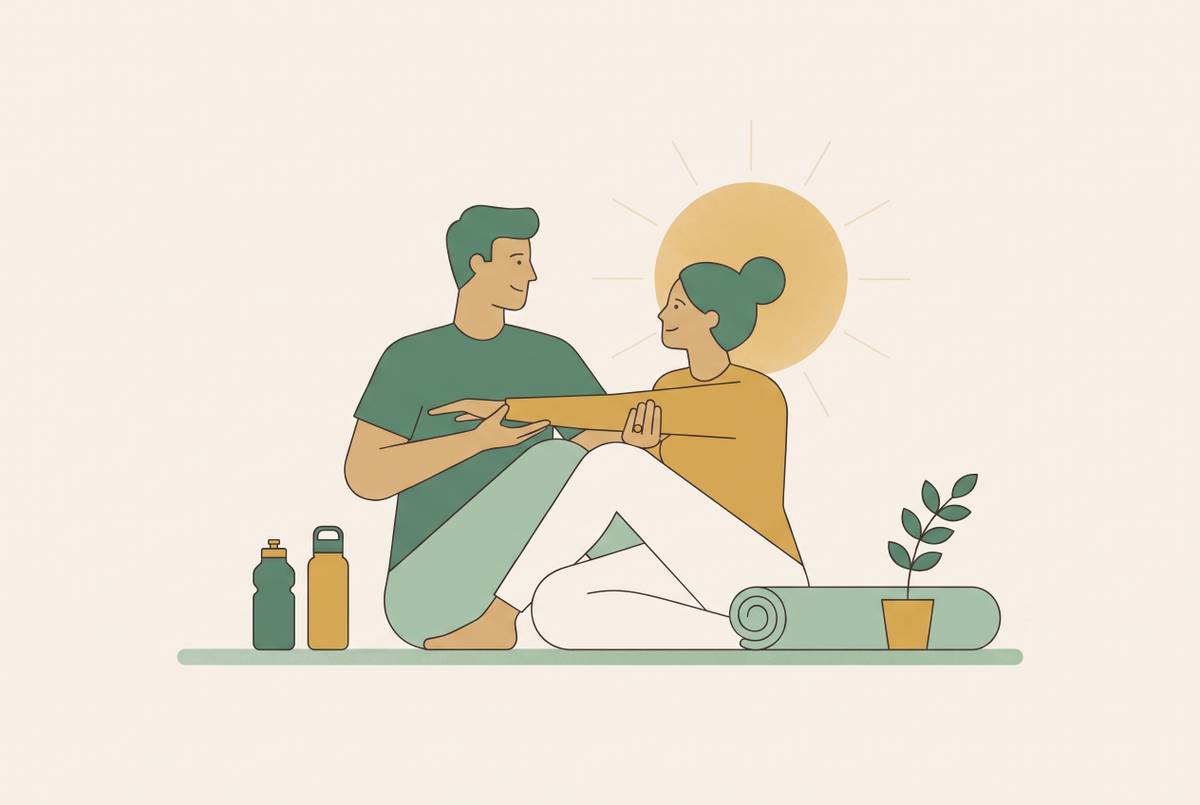
Couples who exercise together have substantially lower dropout rates than those who exercise separately. Committing to showing up for each other gives partners a structure that keeps them going beyond how motivated either one feels that day.
Accountability creates a pull toward showing up without requiring pressure from a partner. Effort contagion also helps when partners exercise together, as seeing a partner keep going when it gets hard can lower one’s own perceived effort. Shared identity supplies a third support. Once exercise becomes part of how a couple describes their life together, missing it interrupts a relational routine.
Research in Annals of Behavioral Medicine found that more satisfied couples engage in more joint health behaviors, which in turn predict better health outcomes for both partners. That connects relationship quality with the way couples approach health. It does not mean one partner must supervise the other. Shared tracking can combine accountability with the intimacy of working toward something together.
The difference between shared exercise and shared ritual, and why it matters for engaged couples
A bride who began walking her fiancé’s dog with him every evening described it as the calmest part of her engagement. She wanted a short stretch of non-wedding conversation. The dog walk provided a repeatable setting for connection. Its value came from the place it held in their day.
That is the distinction between shared exercise and shared ritual. Exercise is the activity, while ritual is the repeatable practice around it, including a familiar cue and a small acknowledgment between partners that it happened. The ritual gives the activity a shared meaning. Two finished workouts show that exercise is something the couple does together, even when they do different workouts.
The club study found that guidance shaped to each person and the way people relate to one another were key to keeping them engaged over the long term. A shared ritual gives the social side a dependable place in the routine, helping movement survive a changing week without making a particular workout the only acceptable choice.
The strongest objection comes from couples with mismatched schedules or fitness levels. If they rarely train together, calling what they do shared can sound generous. But physical co-presence is not required for the accountability component, even though it enables other benefits such as effort contagion and conversation. A repeatable signal that both partners showed up can make the ritual asynchronous.
How a photo check-in delivers the ritual signal without requiring identical schedules
SweatCam gives partners a way to make that asynchronous check-in by sharing a workout photo privately with each other. One partner can send a photo from their session, and the other can do the same after a different activity. Logging takes one action. The weekly goal does not require matching routines, gyms, or fitness levels, so a shared commitment need not become a calendar-merging exercise.
The photo signals to a partner that the session happened and helps them see the effort the other person put in. Keeping the action small also removes some of the friction that makes fitness logging easy to abandon during a stressful week.
Privacy gives that signal a clear boundary. Only the partners can see the photos, which suits the time before a wedding when couples may already feel more on show than usual on social media. The workout needs the person with whom the commitment was made.
A friendly wager can keep the weekly goal playful, with dinner, a chore, or a small reward attached. The tone is important here. A light stake gives the couple something to joke about, whereas a check-in treated as evidence for the prosecution turns support into surveillance. Showing up is the shared achievement.
Why beginners and seasoned exercisers face different risks in the pre-wedding window
Mismatched fitness levels are a common reason couples’ plans collapse, but the two partners face different risks. Beginners need movement that gives the body time to adapt without early injury or discouragement. A good place to start is lower-intensity activity, including walking, bodyweight work, or beginner mobility.
The less visible beginner risk is that novelty fades before automaticity arrives, particularly across the six-to-seventeen-week danger zone. A photo check-in can make an otherwise private struggle into a shared event. Attendance becomes something the partner can recognize. That keeps the emphasis on returning, rather than on how the beginner’s pace, strength, or stamina compares with someone who has trained for longer.
Seasoned exercisers may keep attending reliably while leaving their partner entirely outside an established routine. For them, the practical answer is to add the ritual layer rather than assume an existing training schedule already does the relationship work.
Experienced exercisers may also be tempted to turn the engagement into a performance block. There is nothing wrong with progress, but optimizing a private peak can crowd out building something both partners can sustain. The more durable goal is a shared practice. Both partners can therefore use the same check-in for different reasons, with one gaining support for a new habit and the other making an old habit less solitary.
What shared exercise actually does for a relationship in the months before a wedding
Brigham Young University researcher Jeremy Yorgason’s study found that couples who exercise together say they communicate better, work through disagreements more effectively, and have less conflict in their marriage. Walking was the most commonly reported shared activity. These benefits came without the need for a complex workout. That is a useful contrast to a wedding period when even leisure can start to look like another production.
The researchers suggest that exercise together creates natural openings for conversation and positive interaction, with repeated moments of connection adding up over time. A walk gives them room to talk without having to book another time for it. The activity gives the conversation somewhere to go. For a couple dealing with planning stress, that shared space can be as valuable as the movement.
There is a limit to that promise. Shared exercise can introduce unsolicited coaching, comparisons, and competitive tension, particularly when one partner has much more experience. Be a teammate. A partner who shows up for a walk has not necessarily signed up for a running commentary on their technique.
A couple who walks together four mornings a week for two months has repeated opportunities to listen while navigating a stressful season. An asynchronous check-in can support attendance, but it does not replace those conversations. Where shared time is possible, it adds a different benefit. Arriving at the wedding having practiced listening to each other is no small return on a walk.
How can my fiancé and I build a workout habit together before the wedding instead of doing separate fitness plans?
During weeks one through six, the priority is to establish the ritual through the same approximate time, the same check-in, and the same small stake for missing a weekly goal. Frequency takes priority over intensity. Four sessions a week at low-to-moderate effort are a better foundation for habit formation than two sessions at maximum effort. The plan needs to fit an ordinary busy week with work and wedding decisions.
A sample week could include an incline walk, a bodyweight circuit, yoga, and an evening dog walk, with both partners logging their check-ins. The activities need not match. A beginner can keep movement gentle while an experienced partner follows a familiar routine, and any session that works for both can become shared time. The common thread is the cue and acknowledgment.
During weeks seven through twelve, couples can try different activities or make them a little harder as the cue-response pattern begins to form. Crossing six weeks is not a reason to dismantle what worked. The check-in stays recognizable even if an activity changes, and the weekly goal remains something both partners can return to.
The criterion for choosing activities is whether both partners will actually keep returning to them. By the wedding date, the aim is a shared habit that has passed the early threshold and is still running. The real prize is a practice that still belongs in the relationship after the wedding is over.