How to Notice Fitness Progress Without Measuring It
Pay attention to how your body moves, sleeps, and handles daily tasks.
Fitness progress is often easier to feel than to measure. The clearest early evidence is in how you move, recover, sleep, and handle the day. Learning to notice that evidence makes it easier to keep exercising, because a disappointing weigh-in cannot cancel a body that is getting better at its job.
Why the scale is the wrong primary tool for tracking fitness progress
A scale measures total body weight, but total body weight moves for reasons that have little to do with fitness. Andre Thomas, NASM CPT explains that weight can swing several pounds in a single day from water, food, and hormones, none of it fat. That creates a mismatch in the early weeks of a routine. You can be responding well to training while the number seems to announce that nothing is working.
NASM Certified Personal Trainer Eugene Pallisco noted that most clients come in with several goals they have not fully realized they have, such as looking lean, running without losing breath, and fitting into clothes. Weight alone cannot tell them if they are getting there. Yet when it becomes the main verdict, a temporary fluctuation can outweigh evidence that matters much more. A bathroom scale is a poor performance reviewer when it cannot assess the job you hired it to do.
How the body signals progress long before weight changes
The body starts adapting on the inside. Early strength gains come first through the nervous system, as the brain gets better at putting muscles to work and getting them to move together. Muscle fibers do not have to grow larger before a familiar exercise starts feeling more manageable. You can therefore feel stronger before you look stronger. That easier movement is not a consolation prize for a missing physical change, but part of the change itself.
As training goes on, the heart and lungs can work better within weeks, long before weight changes much. As your heart and lungs work better, you can keep going longer. Recovery is another part of that adaptation. When soreness and stiffness ease sooner and you feel ready to train again after a night's sleep, your nervous system, muscles, and joints are adjusting to the work.
Regular exercise can also help you sleep better by lowering stress hormones, bringing sleep-wake rhythms into better balance, and tiring the body enough to help it rest more deeply. Better sleep then helps you train better, creating a cycle in which recovery supports the next effort. The emotional side has a physical basis too, as exercise boosts endorphins, reduces cortisol, and improves mental clarity. A steadier mood or clearer head after a workout is not imaginary simply because it lacks a readout. These changes need not arrive on a neat timetable to make sense as a sequence, with better coordination and capacity feeding into better recovery and a more manageable day.
The specific, everyday signals worth paying attention to
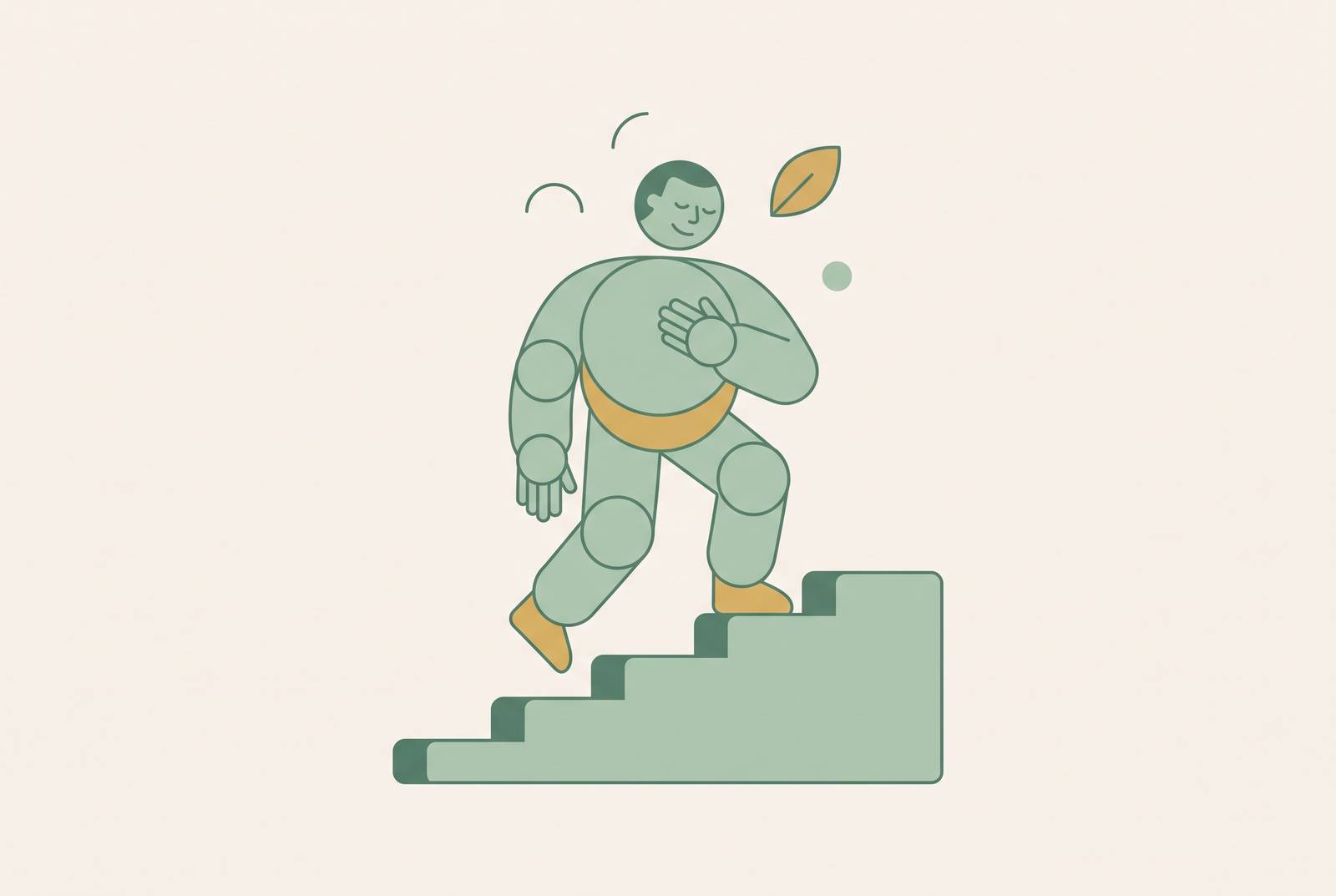
Start with the day outside the gym, because that is where improved fitness often becomes useful before it becomes obvious. Carrying groceries feels easier, climbing stairs takes less out of you, or getting up from the floor no longer calls for a brief negotiation. These are familiar tasks with a familiar cost, so a change in how they feel is meaningful. Having more energy can be an early sign too, as cardiovascular efficiency and oxygen circulation get better. The afternoon slump may flatten, and coffee may become less of an emergency service.
Clothes offer another everyday clue because their fit can reflect changes in body composition that weight alone hides. Losing fat while gaining muscle can change your shape while the number on the scale stays the same. An item of clothing that fits differently is therefore relevant evidence if fit was one of your goals. It helps to notice a change that makes life easier without turning every part of the day into a test.
Inside the workout, progress often feels like having more room to work. Dumbbells that once demanded everything now feel manageable, or you can complete more repetitions before reaching the same limit. Moving from bodyweight squats to loading a barbell is another concrete sign of increased strength. Endurance has a similar signature, with fewer breaks, a pace you can sustain longer, or something left in reserve at the end. A session that used to wipe you out may now feel manageable, even enjoyable, without becoming any less worthwhile.
Across the week, the evidence becomes a pattern. You may be less stiff between workouts, fall asleep faster, wake less often, or feel more rested after training days. Those changes matter because they show how well effort and recovery are fitting together. Mood is part of that pattern too, especially when you often start a workout feeling low and leave with a clearer head. When exercise reliably makes the rest of the day feel easier to handle, showing up begins to offer a benefit you do not have to wait months to receive.
Why noticing these signals makes consistency easier to sustain
That immediate benefit changes the logic of keeping a routine. If only a lower number counts as a reward, every session is on probation until the scale approves it. When easier movement, better recovery, and a clearer head count as evidence, the work already has a visible return. Appearance goals can still matter alongside other ways to judge whether today's effort was worth it.
Habit formation takes time, and missing one day does not erase the process. The early weeks are therefore not just a waiting room for physical results, but the period in which repeated action needs to become established. A deflating weigh-in in week three can make that repetition feel pointless even while the body is adapting. Felt feedback keeps the interpretation closer to what is actually happening, so a disappointing number has less power to derail the next session.
Habit strength is a stronger predictor of sustained physical activity than motivation alone. That makes consistency more important than repeatedly summoning enthusiasm, which is fortunate for anyone whose calendar already has opinions about their free time. Noticing changes that help in daily life helps exercise earn its place there. The goal gradually shifts from securing an outside verdict to developing strength, performance, and the ability to keep showing up. That shift is not lowering the standard, but choosing a standard that can support the behavior long enough for further change to follow.
The workout photo as a feel-based progress tool that also creates accountability
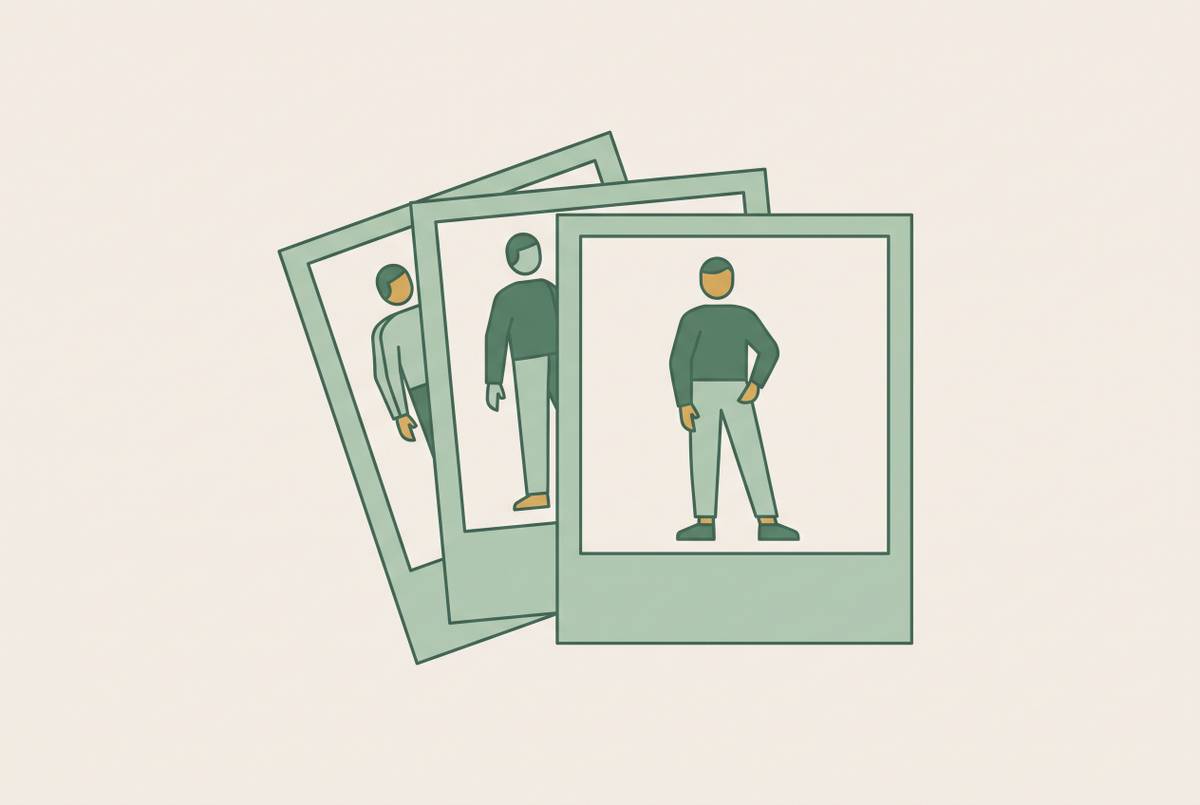
The difficulty with lived progress is that it can be easy to forget. A workout photo gives it a simple anchor, marking the session as complete while preserving a moment you can return to later. In the present, the photo says that the workout happened. Over time, it can also reveal gradual visual change that is hard to notice when you see yourself every day. Those are different jobs, and the photo does not need to show a transformation to succeed at the first.
For the visual job, taking photos at regular intervals in the same location, outfit, and lighting makes changes easier to see. A photo from a month ago gives you something to compare with that you cannot reliably get from seeing yourself every day. Changes in muscle definition and posture may be visible in the photos even when body weight has stayed the same. The image may also capture a change in how confidently you carry yourself. This makes the photo a record of change.
SweatCam makes the photo a check-in you share with someone else. Sending a workout photo to a partner shows that you showed up, without the need for calorie counts, split times, or other statistics. Its home screen widget displays a partner's latest SweatCam photo, keeping the check-in present outside the app. For a beginner, that can create accountability without making performance the price of participation. For a seasoned exerciser, the same photo record can also document body recomposition, when muscle gain and fat loss produce visual change without a change in weight.
The American Council on Exercise advised in a March 2025 framework that performing a behavior in a stable environment, such as always exercising at the same time, increases the likelihood of forming a habit. A post-workout photo puts that idea to work by tying something you do again and again to a moment you know well. It gives you a small ritual to mark the end of the workout without turning it into paperwork. Privacy still matters in a shared gym, so default to a selfie or a private corner rather than a back-camera photo that risks capturing other gym-goers.
How to build a simple, sustainable progress-reading habit
The aim is a light rhythm of noticing. A photo check-in can be the main thread through the week, with an occasional clothes-fit check or functional benchmark adding context. Together, these give you a record without making you measure every day. Each part answers a different question, namely whether you showed up, whether life feels easier, and whether change is moving in the direction you want. None has to become a score that decides whether you can feel good about what you did.
After each session, take the photo as the check-in and confirmation that the workout happened. Once a week, stop and think about whether any movement felt easier than it did the week before. Think about whether sleep felt more restorative or energy lasted longer through the day. You can think about how things felt without building a spreadsheet with a tab for how hard it was to carry the grocery bags.
Once a month, try on a reference item of clothing or revisit a simple functional benchmark. That might be a number of push-ups or a flight of stairs taken without pausing. The purpose is to check direction. Between those occasional checks, the photo and the weekly reflection can carry most of the work. This keeps the practice proportionate to the thing it is meant to support, which is exercising consistently.
The American Council on Exercise emphasizes celebrating small milestones because habit formation is gradual. Acknowledging the commitment to showing up builds confidence in your ability to continue and makes the habit more rewarding. For beginners especially, how often workouts happen and how they feel matter more at first than how soon the body changes. A single deflating weigh-in cannot erase easier movement, better recovery, or the fact that exercise now fits more reliably into your week. Your body has already been giving you feedback, and the useful habit is learning to let that evidence count.